
As a school counselor, you play a pivotal role in meeting the needs of all students, and it’s essential to stay up-to-date with the latest practices through professional development.
However, securing approval and funding to attend these events can be challenging. Here’s a step-by-step guide to help you navigate the process effectively and a justification letter template that you can quickly customize for your next professional development request!
1. Prepare a Justification letter
Start by creating a comprehensive proposal that outlines the event details, including the agenda, topics covered, and the qualifications of the speakers. Include a budget that breaks down costs such as registration fees, travel, accommodation, and materials. Demonstrating a clear understanding of the event will show your administration that you’ve thoroughly researched the commitment.
Use our event justification letter template to get started!
Pro tip: For a lower cost option, consider attending virtual events such as the Hatching Results Use of Data in School Counseling: One-Day Institute or New School Counselor Institute.
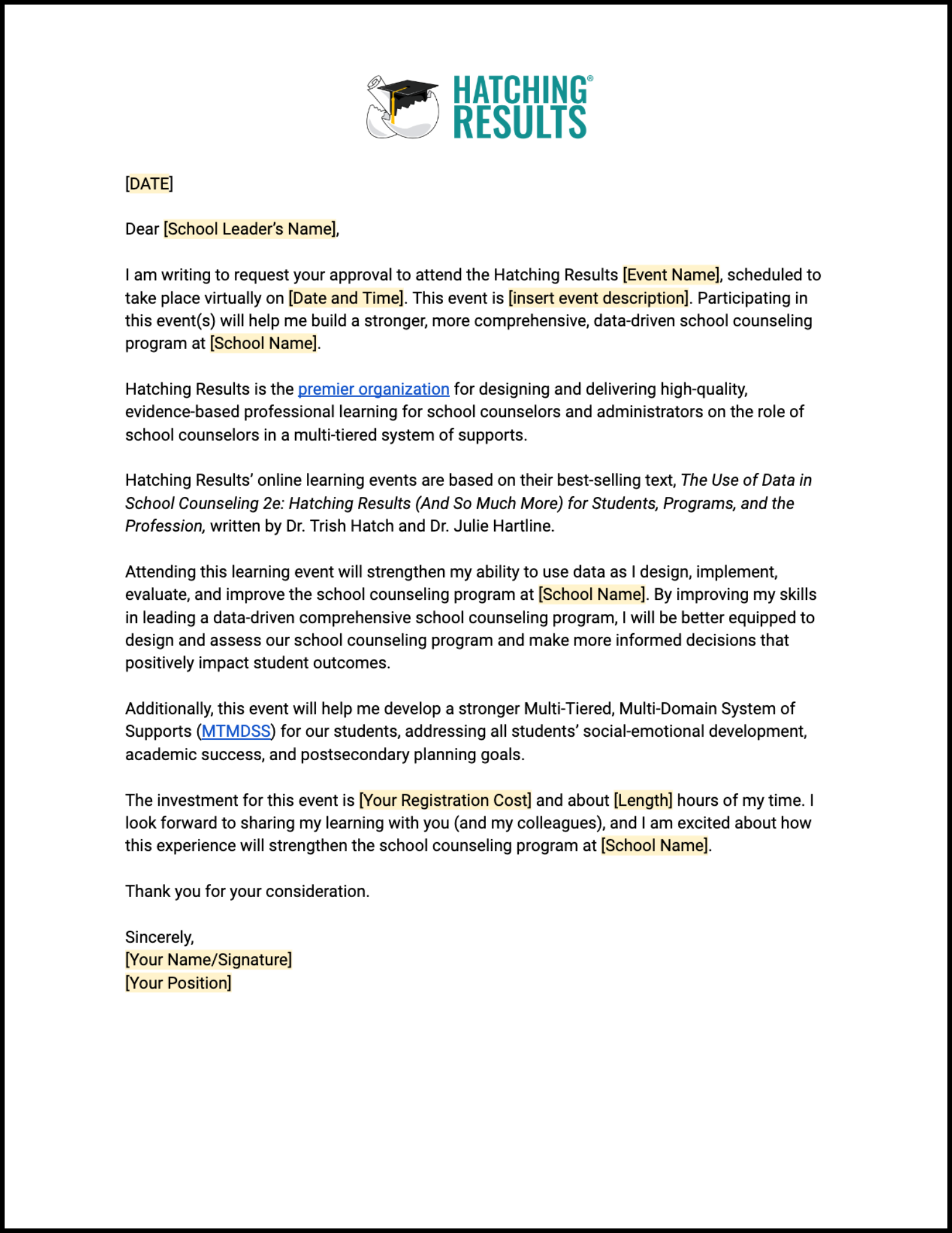
Click to make a copy of the justificaiton letter template
2. Align the Professional Development Event with School and/or District Goals
Familiarize yourself with your school’s or district’s goals related to school counseling services. In your proposal, connect the professional development event’s objectives with your school’s or district’s goals. Provide examples of how attending the event will directly improve student outcomes and enhance the school counseling program.
Identify how the event will help you address current challenges and enhance your comprehensive school counseling program.
Highlight how the knowledge gained will benefit students and align with the school’s or district’s strategic goals.
Articulate the return on investment by explaining how the skills and knowledge gained will be applied in your daily work.
Pro tip: If your school counseling program already has a professional development plan, align the event with those goals!
3. Propose a Shared Learning Plan
Propose a shared learning plan to show your commitment to sharing what you learn. Offer to lead a workshop at an upcoming professional development meeting or create a slide deck with key takeaways to share with your colleagues. This approach demonstrates that your attendance will benefit the entire team.
4. Explore Multiple Funding Sources
In addition to requesting funds from your school, explore other potential funding sources, such as grants, scholarships from professional organizations, or partnerships with local businesses. Consider looking into whether your school’s Parent Teacher Association, school site council, or similar group can provide funding. Presenting alternative funding options can make it easier for your administration to approve your request.
Pro tip: California educators, check out our recent blog post, California Funding for School Counseling, for a comprehensive list of grants and funding sources!
5. Follow Up with Sharing Your Takeaways
After attending the event, follow up with the shared learning plan discussed in step 3. If no shared learning plan was put in place initially, consider putting together a slide deck or document detailing what you learned and how you’ve started to implement the knowledge in your work. Highlight early successes or changes that have positively impacted students or staff. This shows accountability and sets a precedent for future funding requests.
By strategically aligning your request with your school’s or district’s goals and demonstrating the long-term benefits, you increase your chances of gaining the approval and funding you need to continue your professional growth.
Your dedication to professional development is a worthwhile investment in yourself and the success of your students and school counseling program!