
What Can a School Leadership Team Accomplish in One Day?
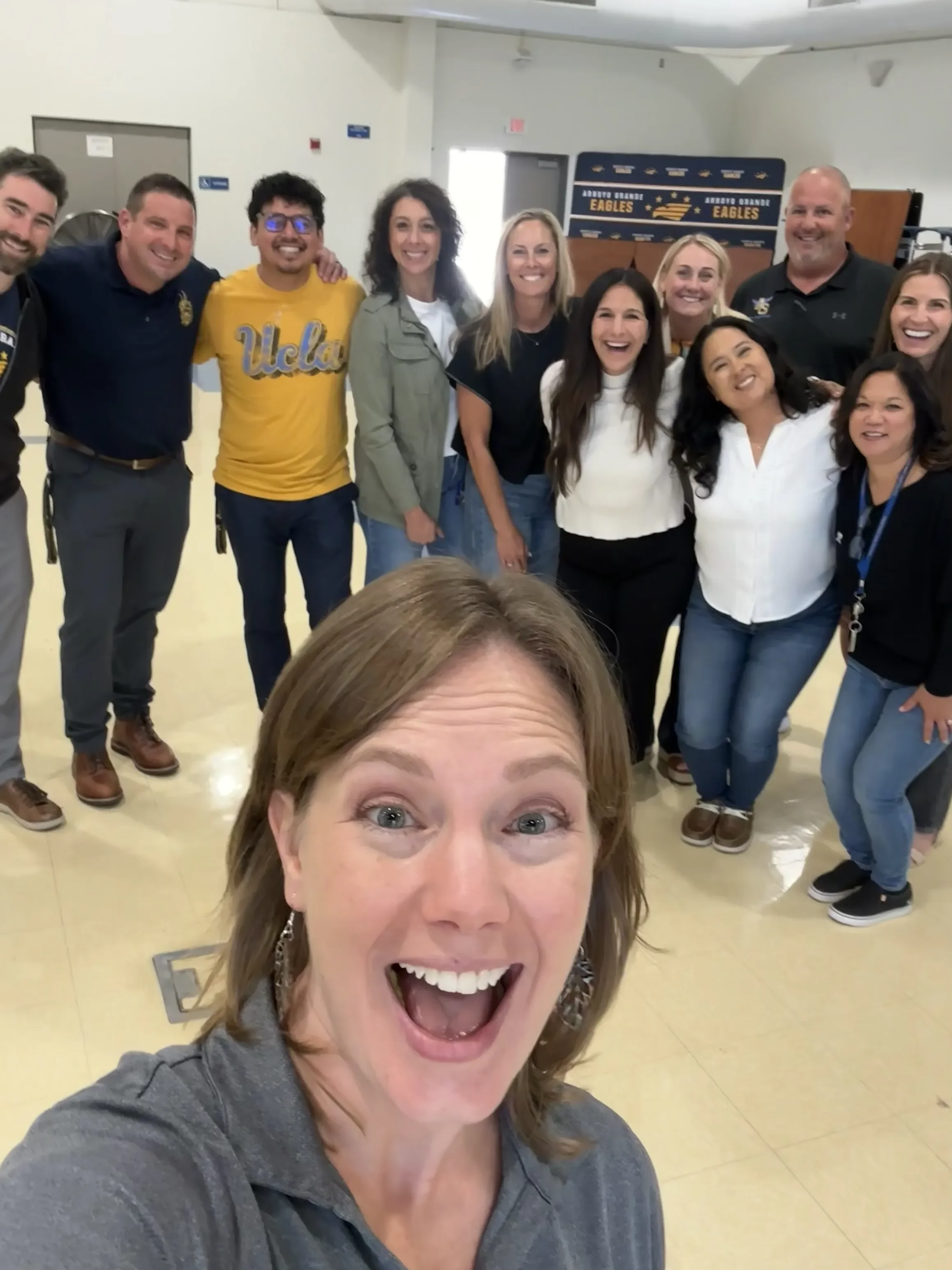
A few weeks before school started, a high school principal reached out and asked me to facilitate a planning session with his leadership team.
In the room were the principal, assistant principal, three area administrators, and the full school counseling team. Their structure is pretty unique: each area administrator partners with two school counselors, and together they share responsibility for a student caseload.
The goal for our day was simple: get aligned, get proactive, and leave with a clear plan for supporting students in quarter one.
And in about six hours, that’s exactly what they did!
We started with one priority
The school already had established Key Performance Indicators (KPIs - ways to monitor progress on goals) focused on attendance, behavior, and coursework. Rather than creating something new, we talked about how to use those existing indicators to identify students who might need support.
Because school hadn’t started yet, the team decided to focus on incoming freshmen, since research suggests that freshman year is critically important to future success.
We reviewed what we know about freshman on track, then used eighth-grade data to identify incoming students who met the team’s agreed-upon criteria.
That gave each administrator-school counselor team a targeted group of freshmen to begin supporting proactively.
Not after a student was failing.Not after attendance had become a major concern. Not after the referrals started piling up.
Before.
That shift matters. Too often, student support systems become heavily referral-driven, with caring adults working incredibly hard to respond once concerns are already visible. Data gives teams another option: What does what we already know tell us about who may need us next?
Data was the starting point, but not the whole story
We also talked a lot about root cause. A data point can tell us that something happened, but it usually doesn’t tell us why. So the expectation isn’t simply, “This student has an attendance concern; assign an attendance intervention.”
The goal is for each administrator-school counselor team to know the name, face, and story of the students on their caseload and understand what may actually be getting in the way before deciding what support makes sense.
What strengths can we build on? What barriers might be contributing? What does the student say is happening?
That sounds simple, but it changes the work.
Then we built the structures to keep it moving
Great planning conversations in August can easily become distant memories once the school year gets busy. So we spent time building the structures that would keep the work moving.
The team developed two calendars:
Their external calendar communicates school counseling program activities, opportunities, lessons, and supports to students, families, and staff.
Their internal calendar keeps the leadership team focused on implementation: recurring meetings, intervention windows, data review dates, planning deadlines, and other behind-the-scenes work.
One calendar communicates the work. The other helps make sure the work actually happens.
We also clarified how the administrator-school counselor teams will:
Meet
Track follow-through
Know whether their supports were working
The team will look at student outcomes—attendance, behavior, and grades—but also at their own implementation.
Did we do what we said we would do?What worked?What didn’t?What should we change?
Then they will review the next round of data and identify the next group of students to support.
In other words, they’re not just implementing interventions. They’re building a process for learning and improving as they go.
We ended with a 90-day plan
After the four-hour team session, the principal, assistant principal, and I spent another couple of hours turning the work into a 90-day plan.
We mapped out baseline data, first-marking-period goals, progress indicators, meeting dates, benchmarks, responsibilities, and next steps.
Nothing fancy, just a clear plan the team can actually use.
I’ll return virtually in October to help them look at how the first round of supports went, what they learned, and what they want to adjust for the next marking period.
Six hours didn’t solve everything. It created alignment.
What struck me most was how the team left the day.
They were excited.
They had clarity.
And they felt hopeful about the work ahead.
They didn’t need a brand-new initiative or a complicated new system. They needed time, structure, facilitation, and the opportunity to think together about how to use the people, data, and systems they already had more strategically.
And it took one day.
By the end, they had moved from a broad goal of “supporting freshmen” to something much more concrete:
Priority → Data → Students → Root Cause → Support → Ownership → Results → Adjustment
What could your team move forward in one focused day?
Your school’s priority might not be freshman success.
It might be attendance. Behavior. College and career readiness. Mental health. Reducing disproportionality and gaps between student groups. Integrated student supports. School counseling program improvement. Tier 2 or Tier 3 systems. Strategic planning.
Or maybe you simply have a lot of caring adults doing important work, but the work isn’t yet as aligned or coordinated as you want it to be.
At Hatching Results, we can design and facilitate strategy sessions like this around the priorities that matter most to your school or district.
Sometimes the most valuable thing a leadership team can do is get the right people in the room, put the right data on the table, and create the space to figure out what comes next.
What could your team move forward in one focused day? What supports do you need? Questions? Please reach out!
