
Celebrating 10 conferences of leadership, learning, and stronger systems for students
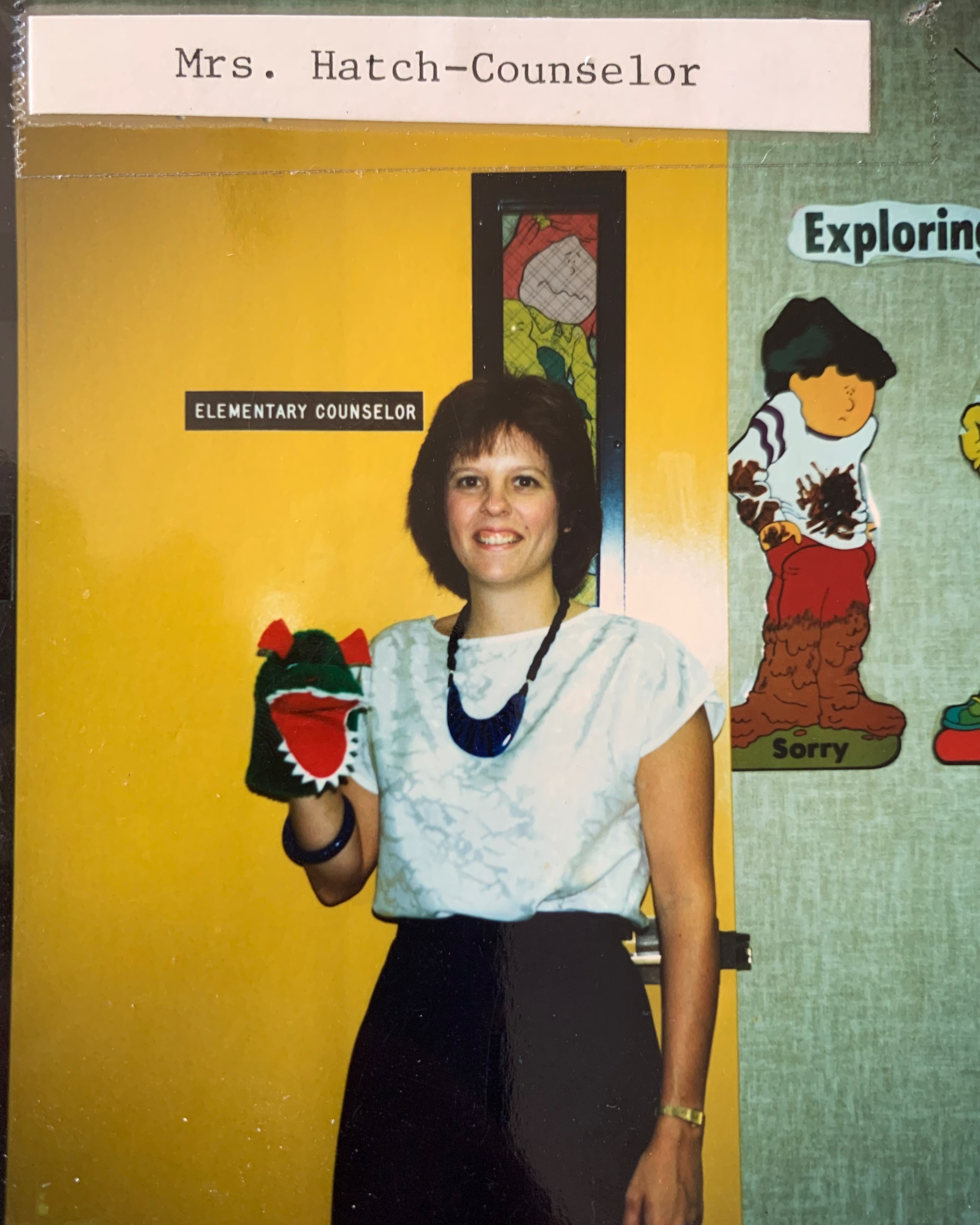
When I became a central-office administrator responsible for school counseling, I quickly realized how little preparation existed for the people charged with leading school counseling programs.
School counselors had professional conferences, associations, and opportunities to learn from one another. Administrators had their own professional learning. But there was very little designed specifically for the people responsible for supervising school counselors and building strong school counseling programs across schools and districts.
Many administrators openly acknowledged that they knew very little about the professional role of school counselors. At the same time, school counselors were often frustrated that their administrators did not understand their work.
And that lack of understanding showed up in hiring, evaluation, expectations, and day-to-day decisions.
Administrators were expected to do the following, often without preparation in any of these areas:
Hire and evaluate school counselors
Develop job descriptions
Supervise programs
Interpret legal and ethical responsibilities
Establish district expectations
Determine how school counseling fits within the larger educational system
As a central-office administrator, I experienced that gap firsthand. I found myself researching state and national documents and creating the things I needed: job descriptions, evaluation tools, screening tools and interview questions, district policies and procedures, and answers to questions about how leading a school counseling department might differ from leading a curriculum department.
Where was I supposed to find what I needed, or know whether I was getting it right? The truth was, there was no roadmap. We were all trying to figure out what good looked like on our own.
And where were administrators doing this work supposed to learn from one another?
Celebrating 10 years of NSCLC!
Join us February 2–4, 2027, in San Diego.
Learn more and register today.
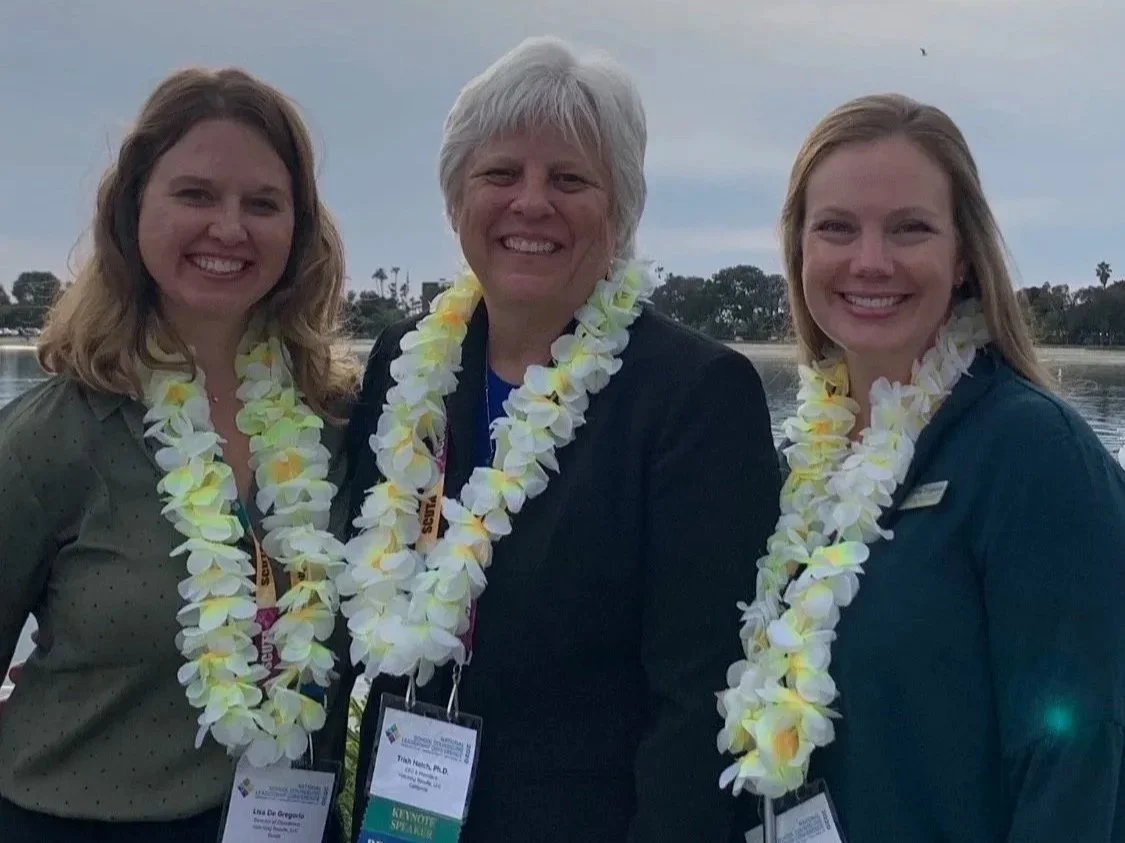
Building the conference we wished existed
I wasn't the only one wishing for a conference for school counseling district leaders. Whitney Triplett and Lisa De Gregorio felt the same way. As School Counseling Specialists for Chicago Public Schools, they supported over 800 school counselors and college access professionals.
In 2017, during a road trip together, Whitney and Lisa called me, frustrated by the lack of professional development for school counseling district leaders. They too wanted and needed to connect with others in similar roles and share how to build sustainable district systems that supported school counseling excellence at the site level. With me on speakerphone as they drove, we started brainstorming.
As we began imagining a leadership conference, we started with two practical questions:
What would we have wanted to attend when we were new to leading school counseling?
What would we have wanted our administrator colleagues to attend?
From there, we listed the strands, sessions, tools, and conversations we wished had been available to us and to the administrators we worked with.
Image: 2018 schedule-at-a-glance
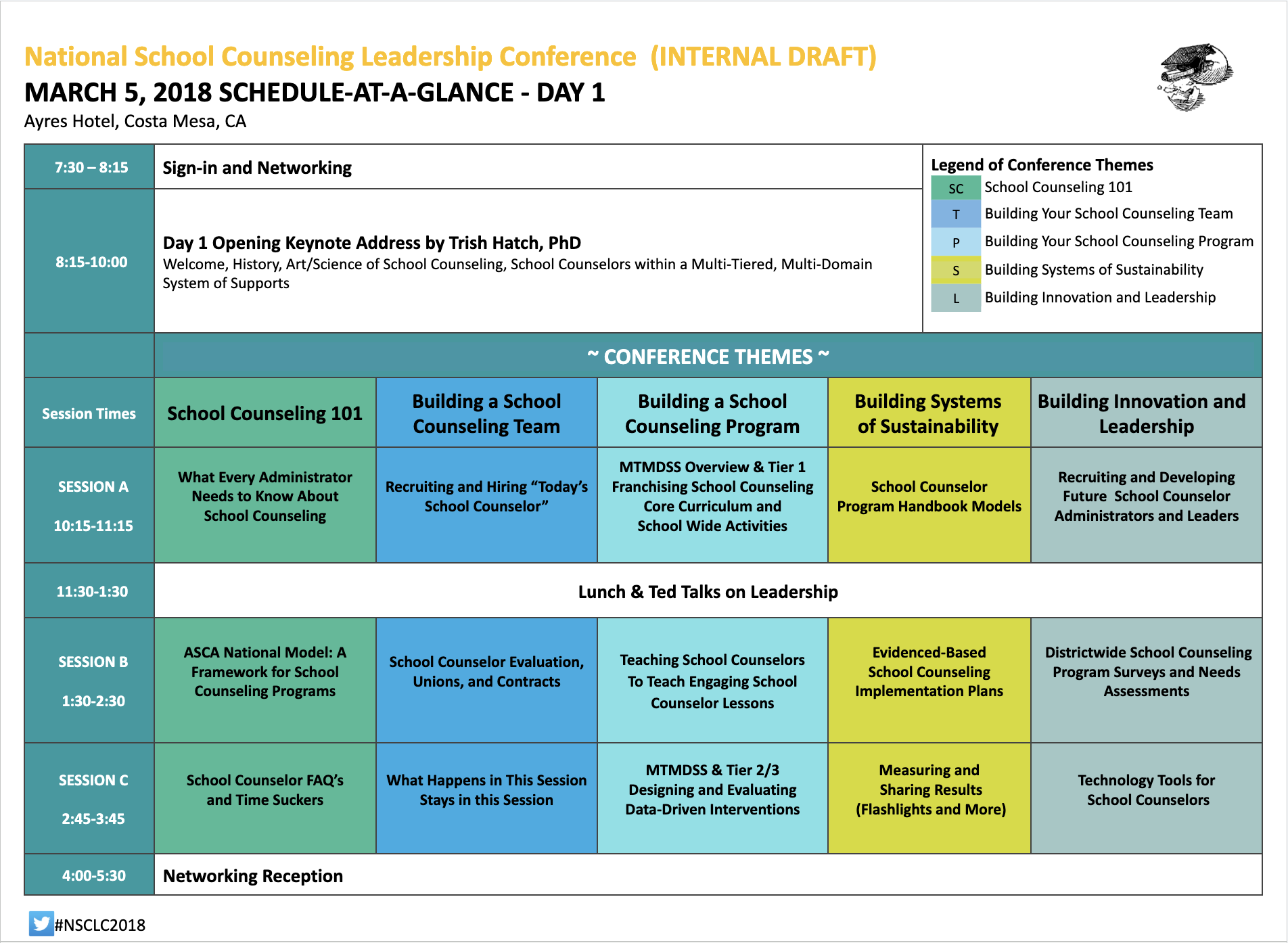
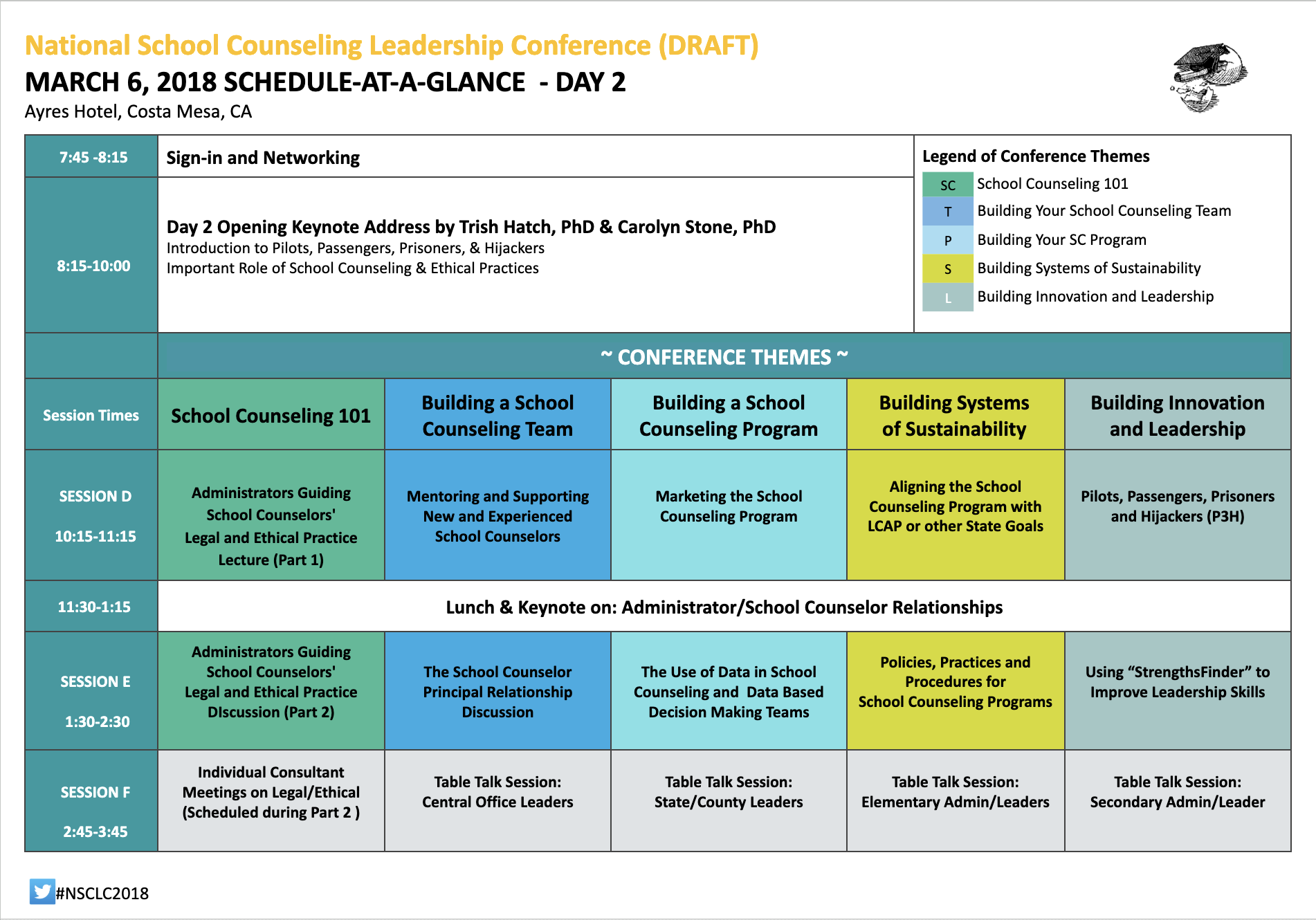
When I look back at that original schedule now, I can see exactly what we were trying to solve. The strands included:
School Counseling 101
Building Your School Counseling Team
Building a School Counseling Program
Building Systems of Sustainability
Building Innovation and Leadership
Sessions addressed what every administrator should know about school counseling, recruiting and hiring school counselors, evaluation, administrator–school counselor relationships, legal and ethical practice, policies and procedures, program handbooks, data-based decision making, districtwide needs assessments, measuring results, and building sustainable programs.
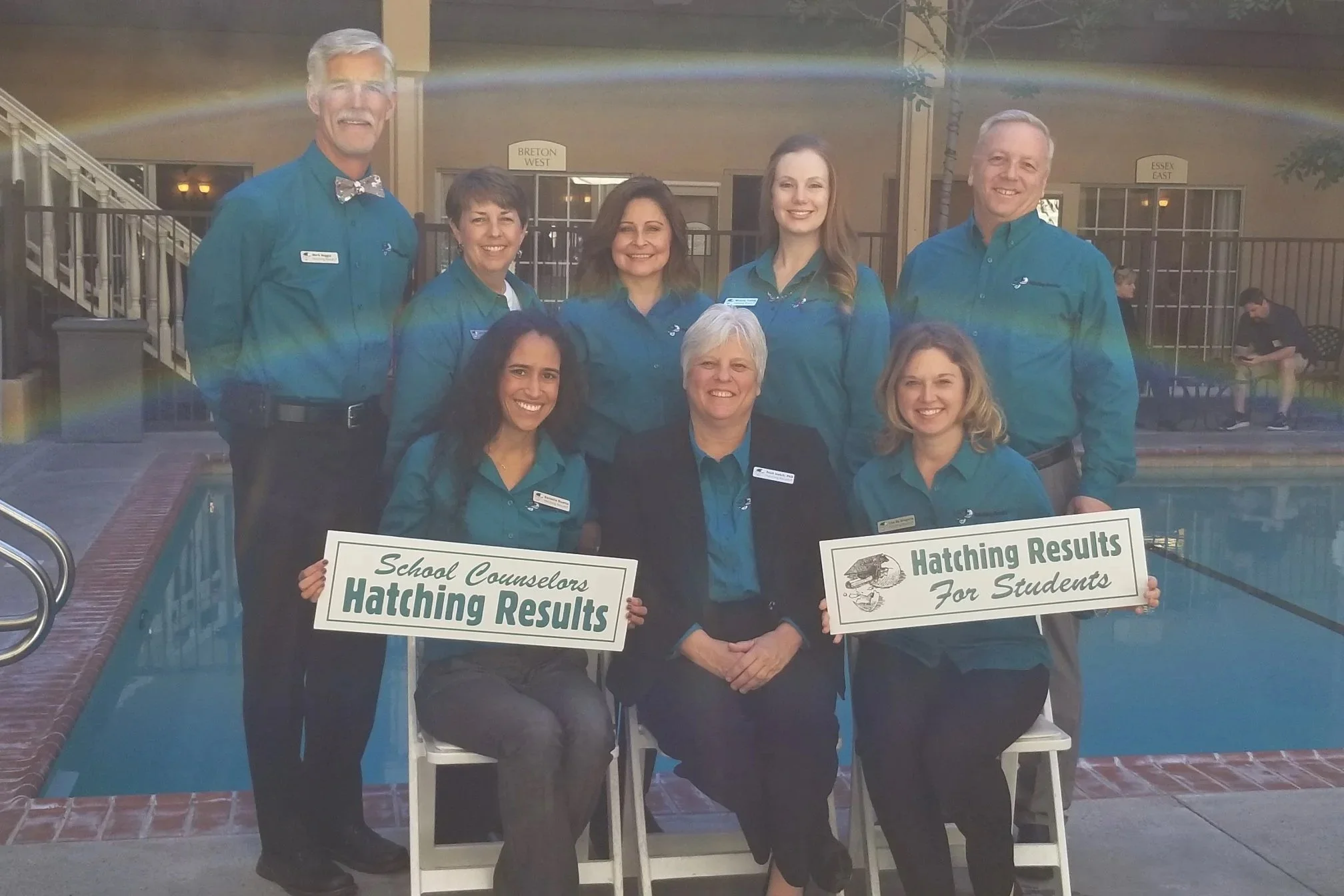
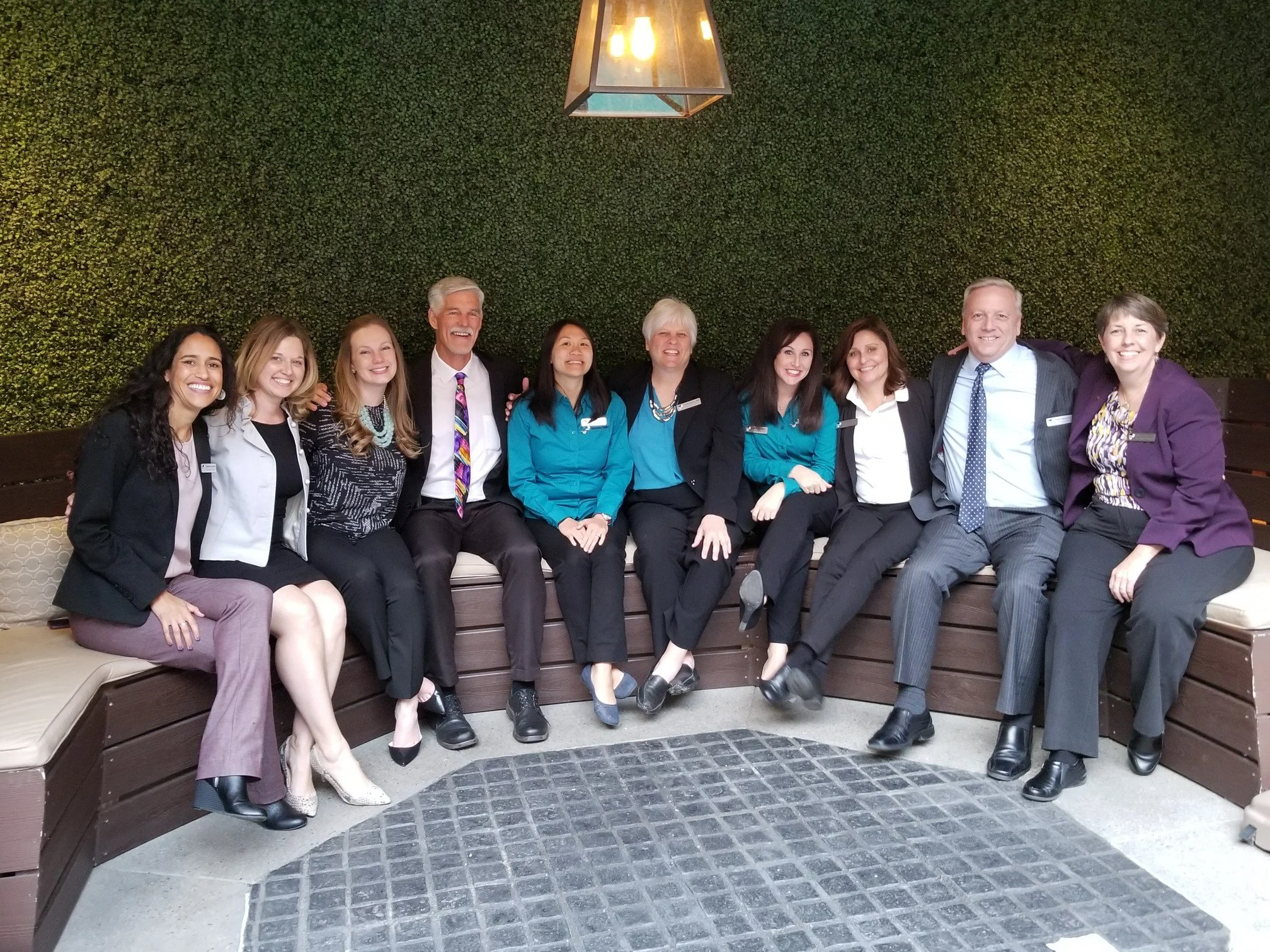
Whitney, Lisa, and I worked together to turn that idea into the first National School Counseling Leadership Conference, alongside Dr. Danielle Duarte and Trisha McHugh.
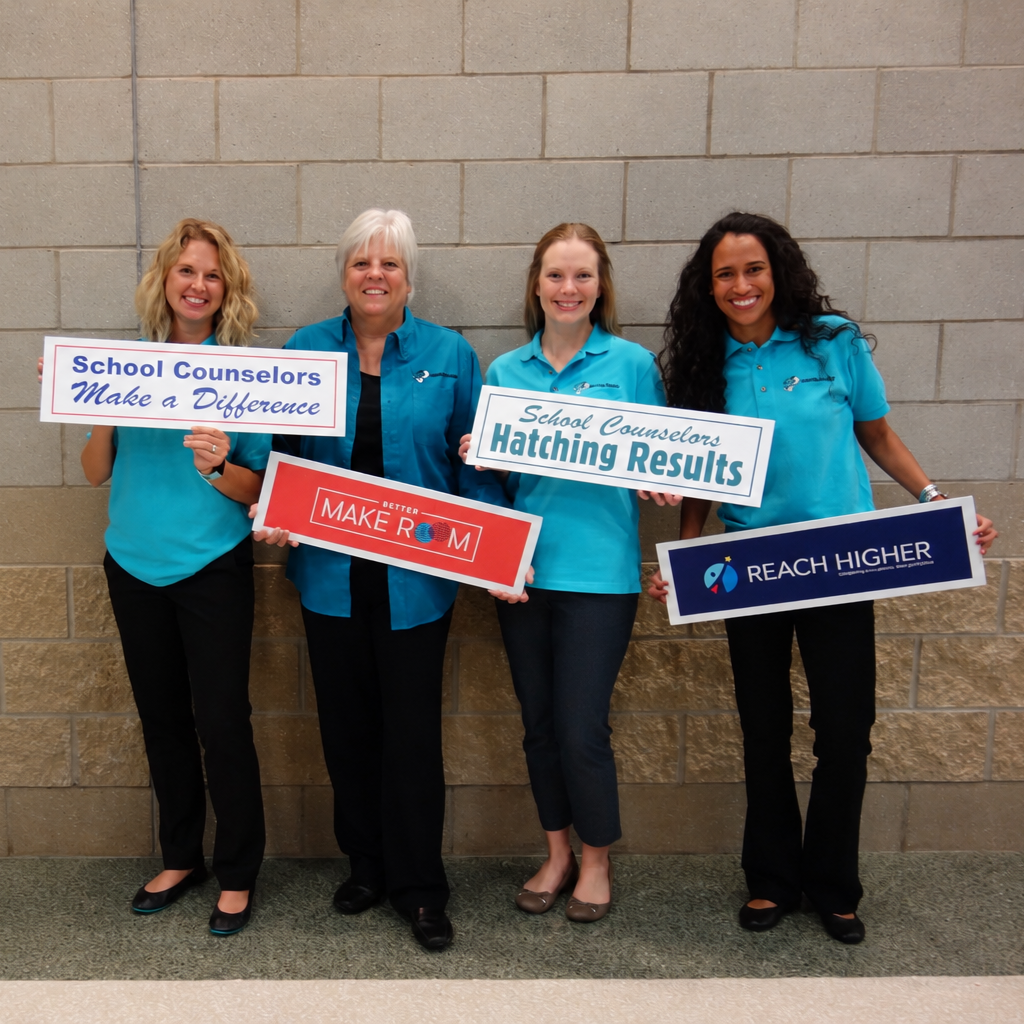
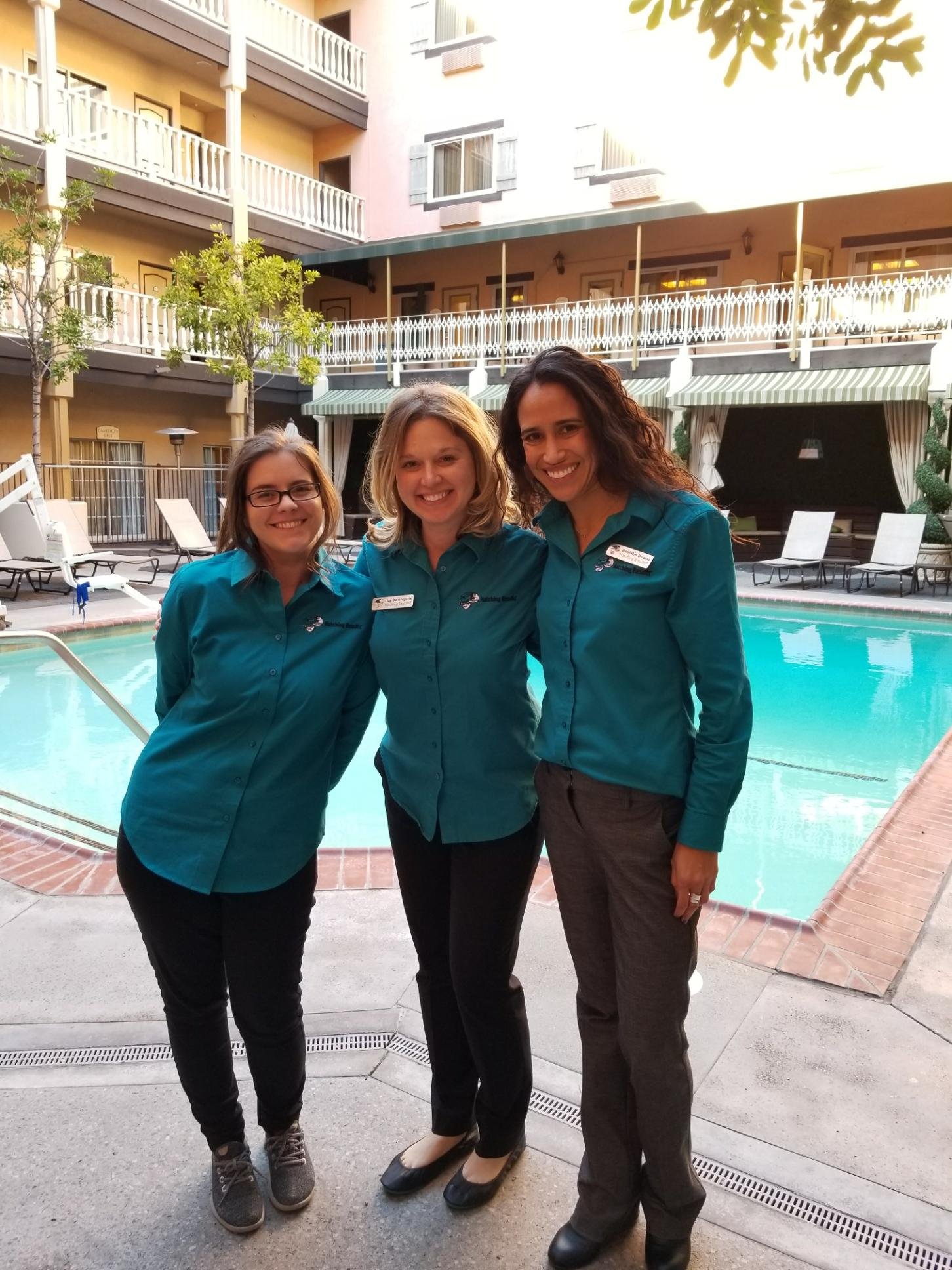
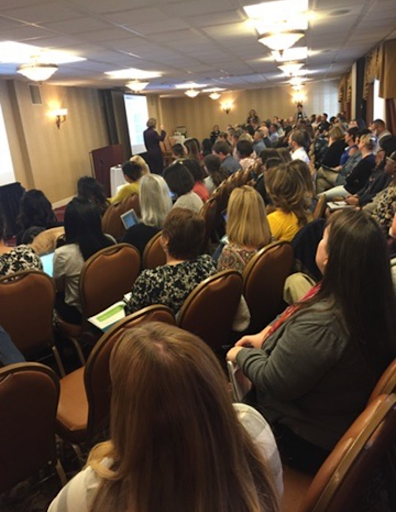
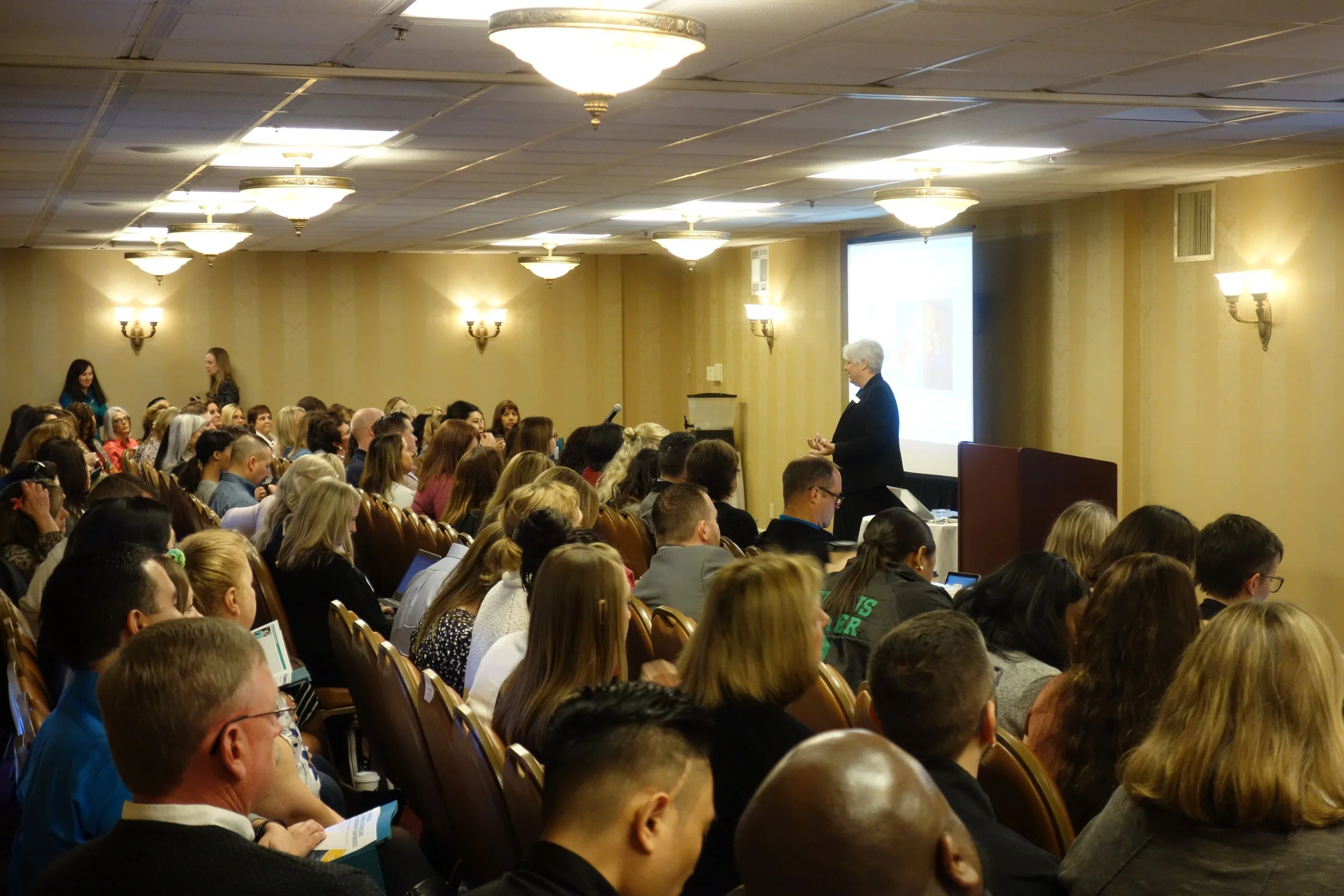
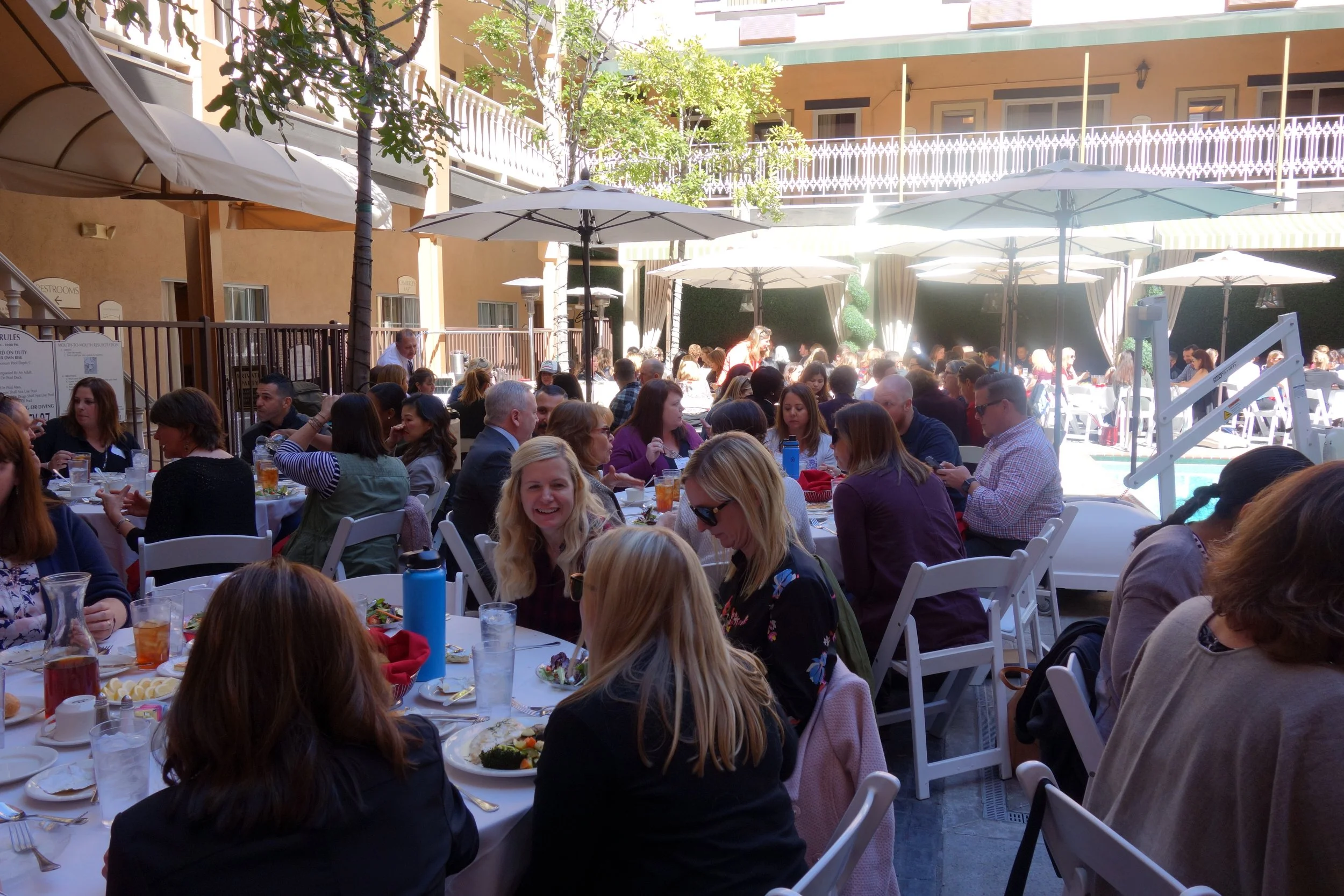
On March 5–6, 2018, 168 people joined us at the Ayres Hotel & Suites in Costa Mesa, CA. We did not know whether administrators and district leaders would come.
They did.
The conference sold out.
And the sessions were full! That was one of the biggest surprises. Unlike many conferences, people weren't hanging out in the hallways, wandering around, or skipping sessions. They went to everything. We also quickly learned that participants needed more than professional development. They needed one another.
Creating a community of leaders
Participants valued the tools and content, but they also valued being able to sit beside another district leader and ask: How are you doing this? Has this actually worked in your district? How did you get your principals on board? How are you handling this issue?
It made a difference when another administrator could say, "Yes, we actually did that. Here's what worked, and here's what didn't."
Leading school counseling can be complicated. Sometimes leaders need tools or expertise. Sometimes they simply need the opportunity to talk with someone else doing the same job.
Over time, that network of sharing challenges and successes has become one of the conference's greatest strengths.
It also kept outgrowing its home. After that first boutique hotel, we moved to the DoubleTree in Mission Valley, then to Paradise Point, San Diego's island resort, which we filled to capacity for each of our last three years there. In 2027, we're moving again, to the Sheraton San Diego Hotel & Marina on the bay.
This community has become truly national. Across the first nine conferences, NSCLC recorded more than 5,300 registrations, with participants representing all 50 states and Washington, D.C., as well as Canada, Egypt, and American Samoa.
Image: 2018 conference session photo
From learning the work to teaching the work
One of the changes we are most proud of has happened gradually.
In the early years, Hatching Results® trainers delivered much of the content. We shared tools and frameworks developed through our work with districts, regions, and states. Presenters at the first conference included Mark Boggie, Dr. Vanessa Gomez, Dr. Julie Hartline, Ashley Kruger, Paul Meyers, Dr. Angela Tang, and Felipe Zañartu, alongside Lisa De Gregorio, Dr. Danielle Duarte, Whitney Triplett, and me. Sessions challenged leaders to think differently about comprehensive, data-driven school counseling programs.
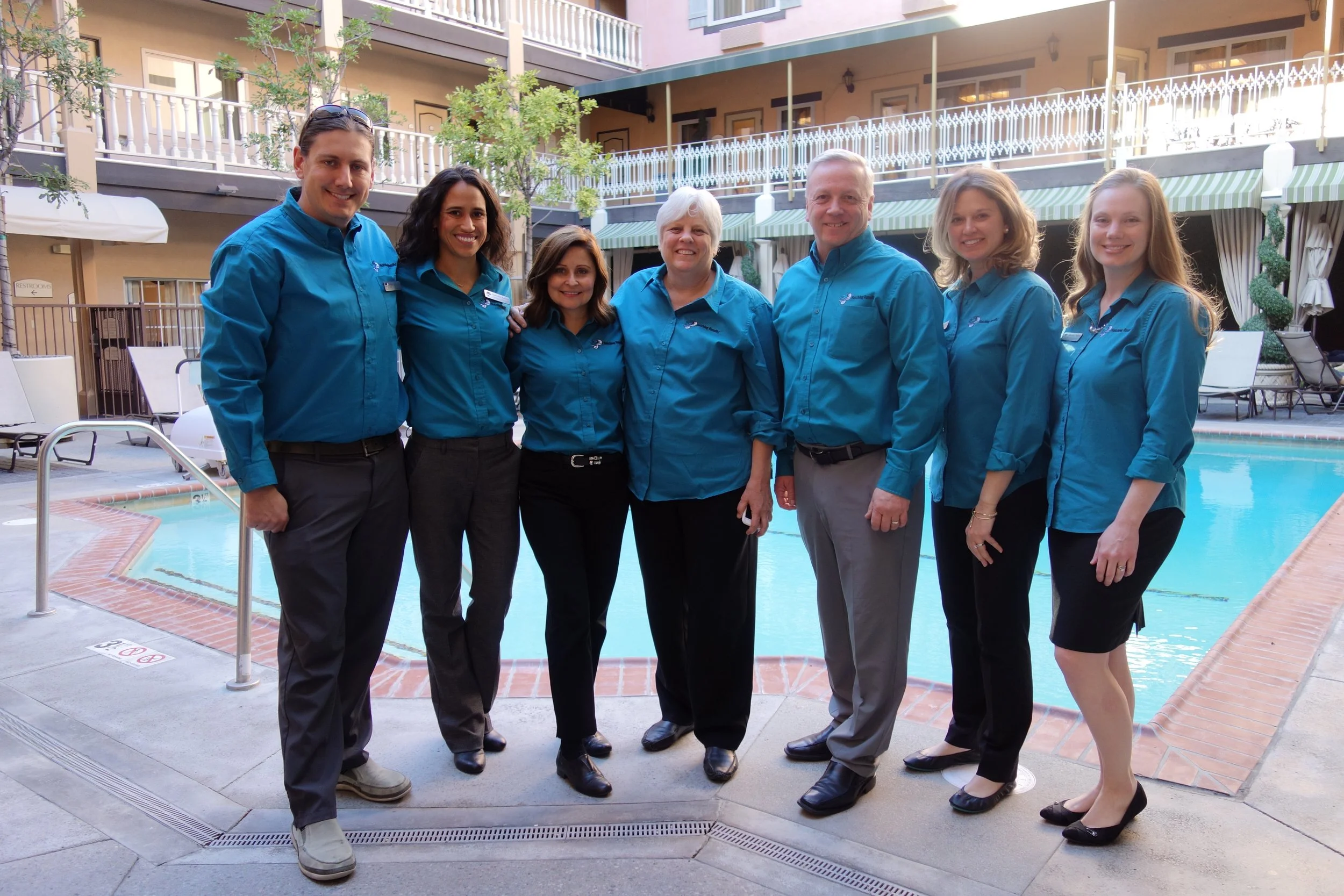
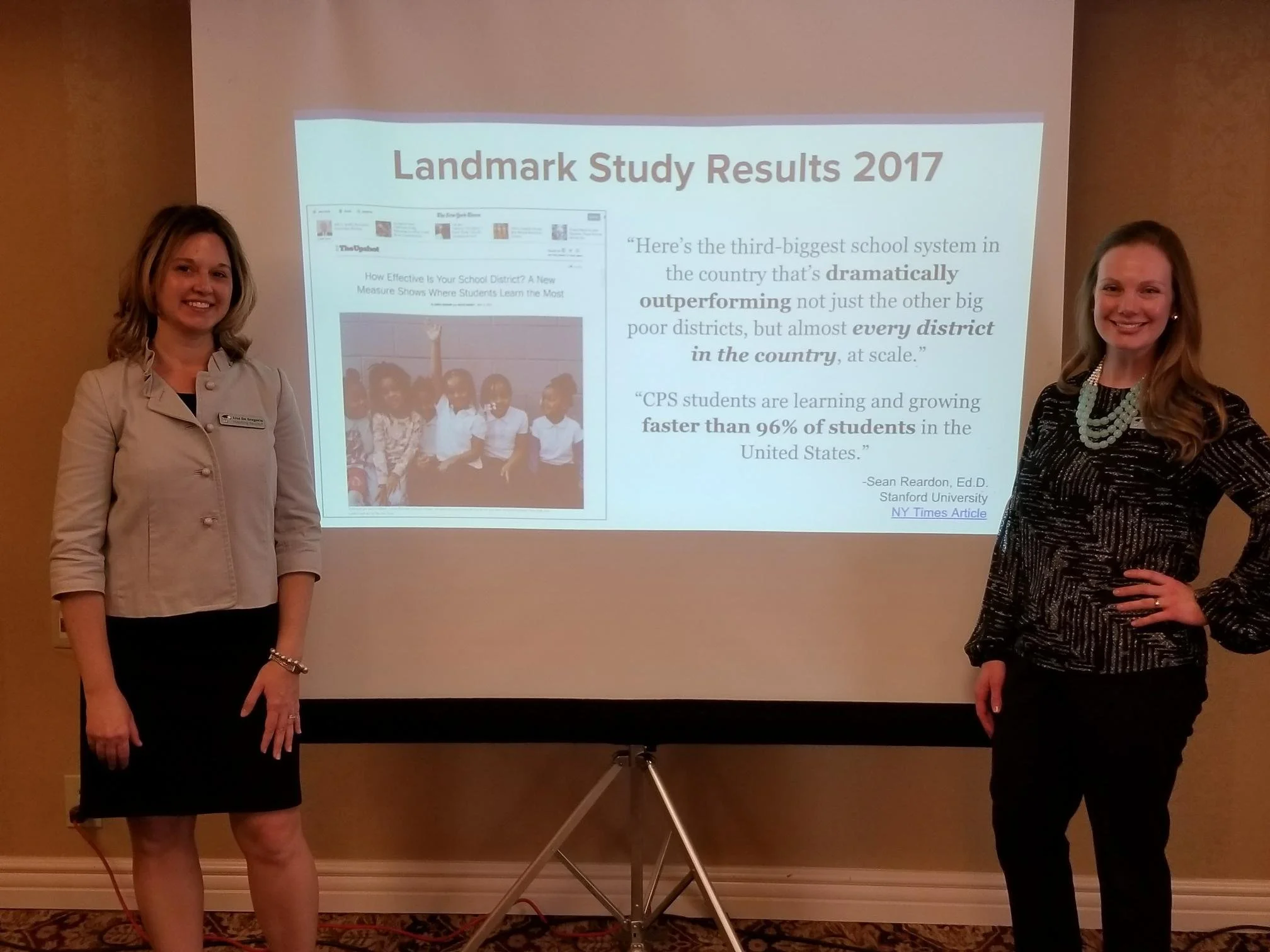
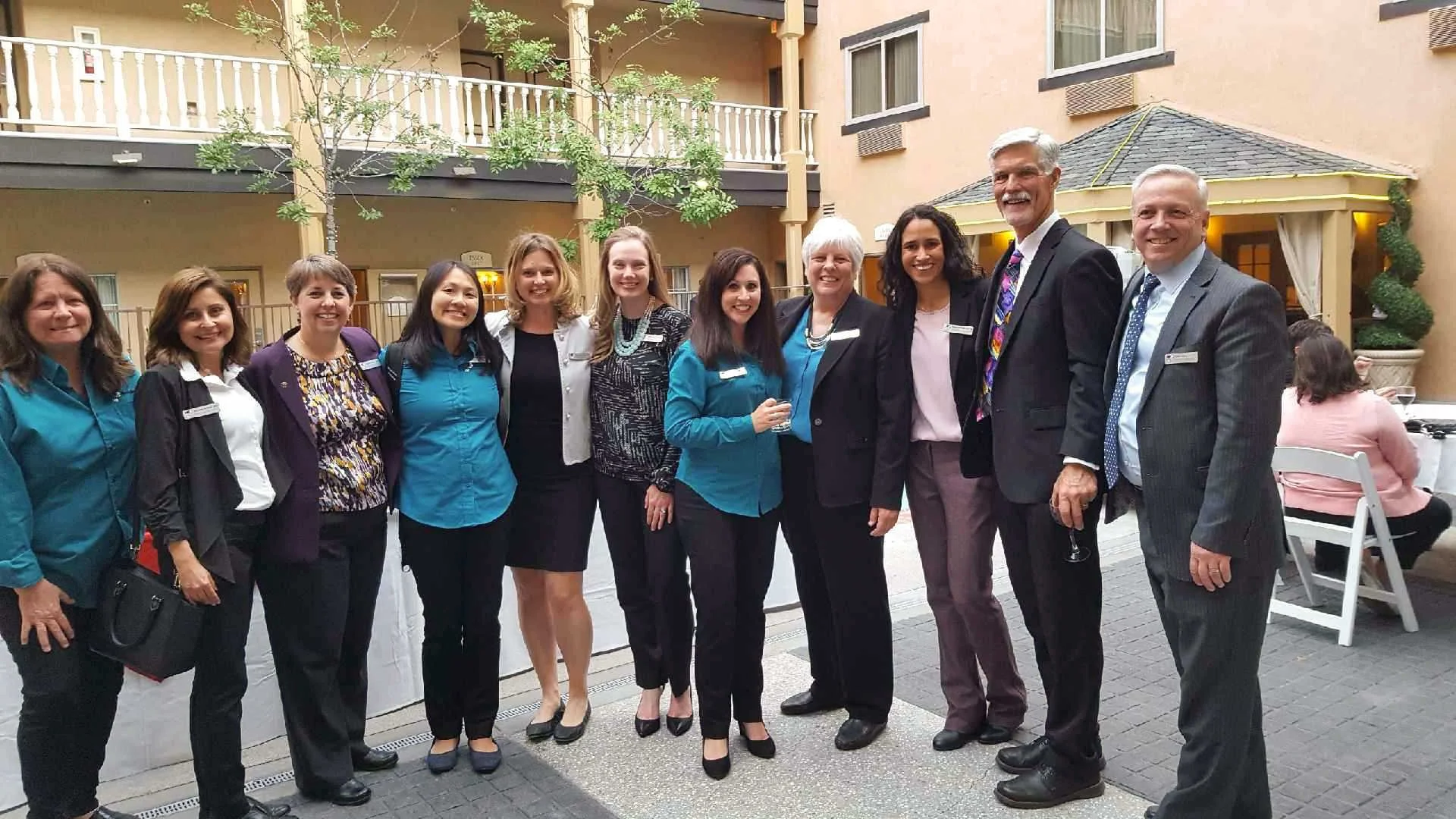
Today, many of the presenters at NSCLC are leaders who took those ideas home and put them into practice. They have changed policies and practices, built stronger programs, improved administrator understanding, used data differently, increased access for students, and learned a great deal along the way.
Now they are teaching one another.
By 2026, the conference included 110 presenters, a remarkable shift from a conference largely taught by us to a conference increasingly taught by the field itself.
That was always the hope.
We never wanted people to have to keep coming back to us for all the answers. The goal was for leaders to learn it, use it, improve it, and then teach one another.
We created the space. Increasingly, the profession is filling it.
The fact that we kept selling out and eventually had to move to larger hotels told us something pretty clearly: The need was real, and it still is.
We still have work to do
The original problem has not disappeared.
In California, for example, administrators are often responsible for hiring, supervising, and evaluating school counselors without having received specific preparation in the professional role of school counseling.
I have sat in hiring conversations where a candidate was favored because the person knew how to build the master schedule, had previously been a teacher at the school, or was simply well known to the administrator.
But building the master schedule is not the professional role of the school counselor, and prior classroom teaching is not a requirement for becoming one. Neither tells us whether a candidate understands the profession of school counseling or has the knowledge and skills to build and deliver an effective school counseling program.
Leadership matters because what we expect, what we evaluate, who we hire, and how we structure the work ultimately determines what students receive.
The next decade: integrated student support
School counselors do not work in a vacuum. Neither do school psychologists, social workers, school-based mental health professionals, wellness coaches, nurses, administrators, teachers, or the many other professionals responsible for supporting students.
For too long, student-support professions have sometimes found themselves competing for limited funding, positions, time, and recognition. Students do not benefit from that competition. We need all of these professionals.
For years, we have taught school counselors to “stay in their lane”. The point was never to work in isolation. It was to understand and protect each unique professional role, avoid being pulled into responsibilities that belong elsewhere, and use our specialized expertise where it has the greatest impact.
That still matters.
But perhaps the next step is to know your lane and build bridges.
Role clarity and collaboration are not opposites. Integrated student support requires both. School counselors, school psychologists, social workers, wellness coaches, nurses, mental health professionals, administrators, teachers, community partners, and others need to understand what each brings to the work, know when and how to refer, share information appropriately, use data together, and coordinate services around student needs and outcomes.
The goal is not for school counselors to do more of everyone else's work. It is to make sure the right people are doing the right work, together.
It also means preventing situations where four different professionals inadvertently duplicate services for one student while another student receives no support at all. We must coordinate rather than duplicate, and collaborate rather than compete.
As Hatching Results moves into this next decade, our professional development will increasingly include the broader student-support team and the leaders responsible for building systems in which those professionals can work together effectively.
Students already experience school as one system. The adults supporting them need to operate more like one, too.
Recognizing the leaders who have done the work
Across the country, districts have moved beyond simply learning about comprehensive school counseling and have made significant changes to the systems that support it. They have rewritten policies and job descriptions, added school counselors, developed districtwide handbooks and evaluation tools, built K–12 programs, strengthened data practices, and improved administrator understanding.
Most importantly, many have documented better experiences and outcomes for students.
Student results tell us whether the work matters. System results tell us whether the work will last.
We want to do more to recognize and learn from those districts, to start honoring the ones that have actually done the work. The districts that didn’t just learn about change, but transformed programs, policies, practices, and systems, and demonstrated that those changes are making a difference for students.
This year we will be celebrating districts across the country with the inaugural H.A.T.C.H. District of Distinction recognition: Honoring Advancement, Transformation, Change & Hope. Join us at NSCLC to hear their stories, learn about the changes they’ve made, and discover the impact on both systems and students.
Join us for what comes next
As we celebrate the 10th National School Counseling Leadership Conference, we are proud of what this community has built, and we are even more interested in what we can build together next.
The 2027 National School Counseling Leadership Conference will take place February 2–4, 2027, at the Sheraton San Diego Hotel & Marina in San Diego, California. It is designed for district leaders, school administrators, department chairs and lead counselors, state and regional education leaders, association leaders, and others responsible for supporting and leading school counseling programs.
This conference also welcomes school counselors and other student support professionals who aren't in a designated leadership role yet, but who see themselves heading there and want to start building the skills now. And when administrators attend alongside their site-based school counselors, the impact multiplies: shared learning means shared language, shared urgency, and a much faster path from idea to implementation.
If you are responsible for leading this work, or trying to figure out how to do it better, we hope you will join us.
Come for practical tools and strategies you can take home. Come with the questions your district, region, or state is wrestling with. Bring the people who need to be part of the conversation.
And come ready to learn from leaders across the country who are trying things, figuring out what works (sometimes from failure!), and sharing what they've learned.
NSCLC has sold out in advance for the past three years, and registration for 2027 is open now.
Come learn with us. Help us shape the next decade of support for students.
If I could go back
Sometimes I think about that younger central-office administrator looking for job descriptions, evaluation tools, practical resources, a roadmap, and other administrators who understood what she was trying to do.
If I could show her the National School Counseling Leadership Conference today, I think she would be both impressed and relieved.
There is finally a place to get the tools, bring your administrators, ask the hard questions, and talk with people who are actually doing the work.
I know exactly what I would have done: I would have figured out how to send every darned administrator in my district!

Click the graphic above to learn more about NSCLC 2027 and register today!