
Self-Care for School Counselors in Uncertain Times: A S.T.R.E.T.C.H. Guide
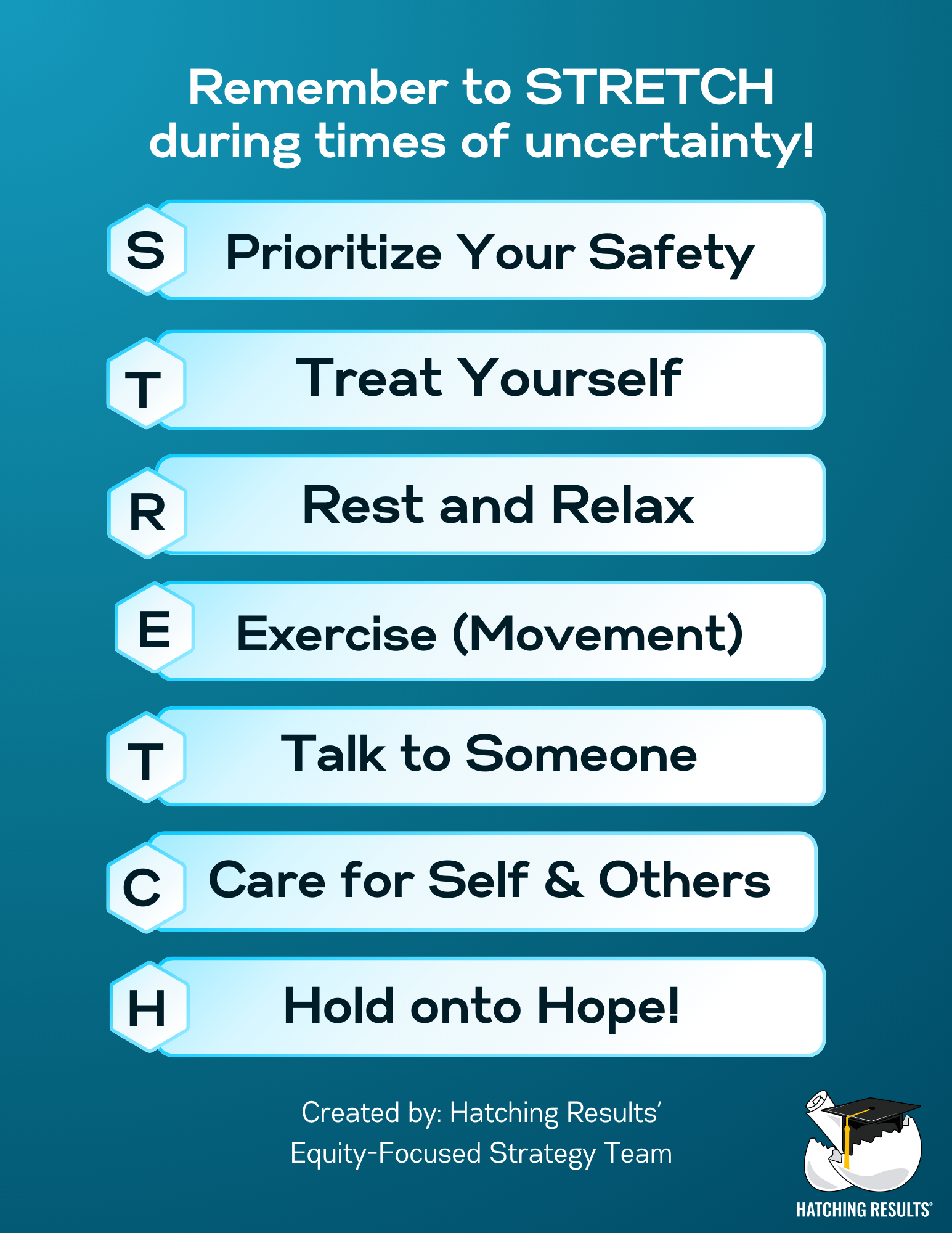
As a school counselor, you face unique demands, especially during times of uncertainty or apprehension about the future. To help you stay grounded and effective, we’ve developed the S.T.R.E.T.C.H. Guide—a self-care framework designed to address the challenges you face while supporting students and school communities.
S - Prioritize Your Safety
Set boundaries around emotionally draining situations, whether it’s limiting exposure to upsetting news or managing after-hours communication with students, families, and staff. Create a space to recharge and ensure your physical and emotional well-being is protected.
T - Treat Yourself
Carve out time for activities that bring you joy outside of your role as a school counselor. Whether it’s a relaxing walk, baking your favorite treat, or catching up on a show, small acts of kindness toward yourself build the resilience needed to support others.
R - Rest and Relax
School counselors are often the go-to for handling crises, which can be exhausting. Make sleep (7–9 hours) a priority, and include relaxation practices like deep breathing or mindfulness during your workday to stay centered and focused.
E - Exercise
Long days of meetings, consultations, and hallway check-ins can leave you feeling drained. Incorporate movement into your day—whether it’s standing stretches between sessions or a brisk walk after school—to keep your energy and mood lifted. We were recently inspired by this NPR story on the importance of movement!
T - Talk to Someone
Dealing with heavy emotional challenges from students can be isolating. Make time to talk with a trusted colleague, peer, or therapist to process your experiences. Peer supervision or small-group discussions can help normalize the stress you may feel.
C - Care for Self and Others
Show care for others without overextending yourself. Set boundaries with students, staff, and families to protect your own energy, and model healthy self-care habits to encourage emotional well-being in your school community.
H - Hold onto Hope
In the midst of challenging times, focus on the impact you’re making, even if it feels small. Celebrate successes, whether it’s a breakthrough conversation with a student or the progress of a program you’ve implemented. Stay connected to your purpose and the difference you’re creating.
Take a Moment to S.T.R.E.T.C.H.
As a school counselor, your well-being directly impacts your ability to support students. By prioritizing self-care, setting boundaries, and finding moments of hope, you can continue to guide your school community through these challenging times with strength and compassion.
