
From Data to Action: Oregon School District’s (WI) Closing the Gap Journey
The Background
In the 2023–24 school year, school counselors in the Oregon School District in Wisconsin participated in Hatching Results’ Data Data Data online course to build a shared baseline understanding of how data can be used in school counseling programs. The course introduced foundational concepts for using data to inform decisions, identify gaps, and tell the story of counseling impact.
Following the course, Mindy Willard facilitated an in-person debrief with the school counseling team. That experience sparked meaningful dialogue and a clear desire to move from understanding data concepts to applying them in practice.
The Challenge
Like many districts, Oregon School District faced the challenge of moving from knowing about data use to applying it consistently and confidently across schools. School counselors needed structured time, guidance, and support to translate data into targeted interventions addressing gaps in student achievement, behavior, or attendance.
The district sought professional learning that honored school counselors’ expertise, aligned with Comprehensive School Counseling Program (CSCP) practices, and resulted in meaningful outcomes.
The Solution
In the 2024–25 school year, Oregon School District partnered with Hatching Results to implement the Closing the Gap Learning Series.
This six-part learning experience was designed specifically for CSCP staff and guided school counselors through a hands-on project focused on identifying a data-defined gap, implementing an intervention, and evaluating results. School counselors worked on authentic challenges within their own schools while building shared language and practices across the district.
The Results
As a result of this work, school counselors from three Oregon schools — Brooklyn Elementary, Forest Edge Elementary, and Rome Corners Intermediate — submitted Wisconsin School Counselor Program Accountability Reports (WSCPARs) and were recognized by the Wisconsin School Counselor Association. These reports demonstrated measurable improvements for students across attendance, behavior, and academic outcomes.
These reports demonstrated measurable improvements for students across multiple outcome areas:
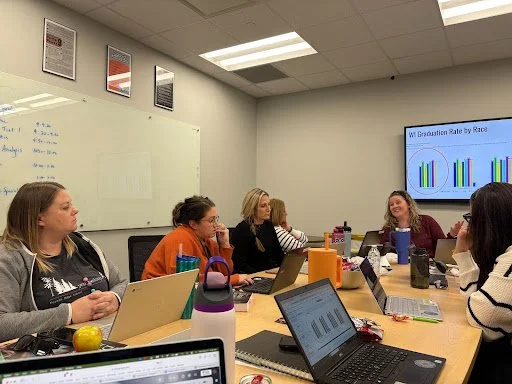
Rome Corners Intermediate
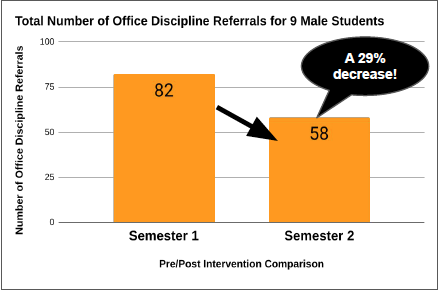
Behavior Outcomes
Office discipline referrals for nine identified 5th and 6th grade male students decreased by 29%,
dropping from 82 referrals in Semester 1 to 58 in Semester 2.
“Seeing a 29% decrease in office discipline referrals for this group of students was incredibly meaningful. Using data helped us focus our interventions where the need was greatest and work intentionally with a small group of students. Having our entire Student Services Team involved made a big difference, and this process helped us see where to fill gaps and put real plans in place.”
Brooklyn Elementary School
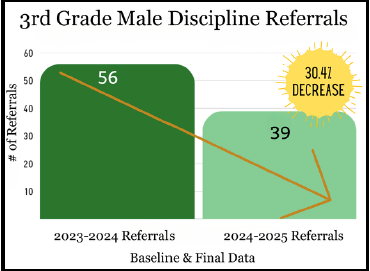
Behavior Outcomes
Following targeted counseling interventions, discipline referrals for 3rd grade male students decreased by 30.4%,
from 56 referrals in the baseline year to 39.
Forest Edge Elementary School
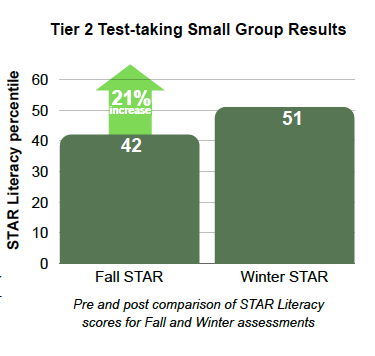
Academic Outcomes
Students participating in a Tier 2 test-taking small group increased their STAR Literacy percentile scores by 21%, improving from the 42nd percentile in the fall to the 51st percentile in the winter.
“We enjoy using data to plan our interventions because it allows us to identify students who most need support and keep track of results so that we can make necessary changes. It is so helpful to see how well interventions are working so we can advocate for our work and decide which interventions to continue and which are not working. Our program feels more intentional and equitable with some (flexible) data-oriented processes in place. ”
“Collaborating with Hatching Results has enabled our counseling team to be more intentional in the use of data and to clearly demonstrate the impact of their work in serving and supporting students. This partnership has also strengthened our ability to communicate with the community and school board about the critical role school counselors play in advancing student success.”
“Oregon’s counselors didn’t just learn about using data—they applied it in ways that improved student outcomes and strengthened their programs. That kind of growth happens when districts invest in meaningful, sustained learning.”
Together, these results highlight how intentional professional learning and district partnership supported counselors in using data to drive targeted interventions, promote equity, and clearly tell the story of their impact.
View the Full WSCPAR Reports
For readers who would like to explore the full accountability reports and data in more detail, view the complete WSCPAR submissions from each school below:
