
From 22 to 73 School Counselors: Pomona Unified School District Shows What’s Possible
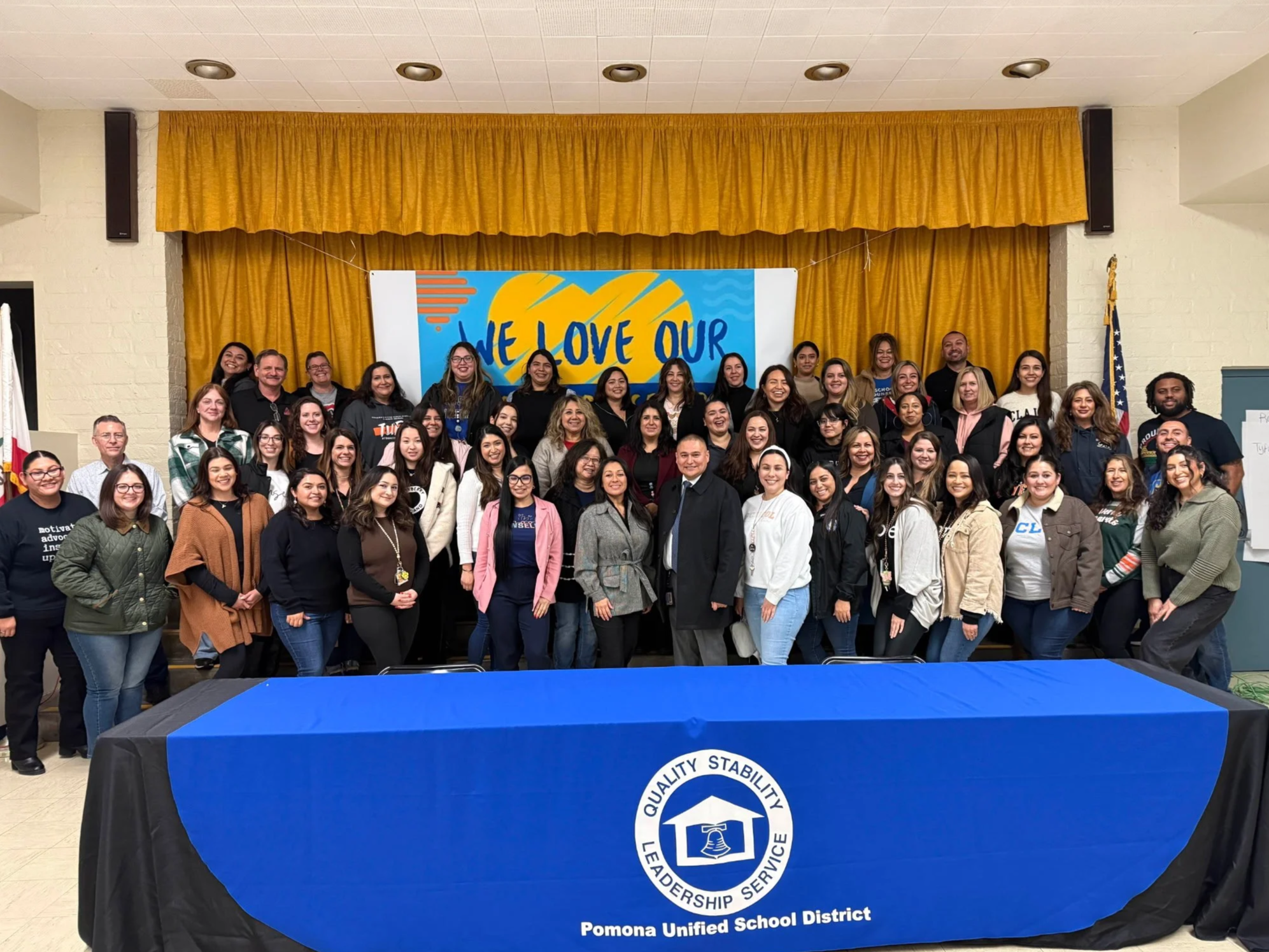
Pomona USD Team, 2025
The Background
Pomona Unified School District (PUSD), located in eastern Los Angeles County, California, serves more than 21,000 students. The district is made up of students with diverse needs across grades preK–12, including 88% socio-economically disadvantaged and 24% English learners.
In 2014–2015, the district hired its first elementary school counselor to support students across 27 school sites, joining a team of 21 secondary school counselors. Caseloads were substantial, with an average school counselor-to-student ratio exceeding 1:1,100. At the time, school counseling services were largely reactive and varied widely across campuses. District leaders recognized the need for a unified, equitable, and student outcomes-focused comprehensive school counseling program that could consistently serve all students districtwide.
The Challenge
The PUSD school counseling team struggled to perform their duties due to numerous difficulties. While reflecting on the 2015 school year, Cesar Casarrubias, Director of Pupil Resources, describes the school counseling program at that time as often being on “islands where each school site operated differently. Counselors were frequently bogged down by ‘non-counseling’ tasks—like heavy administrative duties such as supervision and discipline at some sites—which left little time for direct services. There was a lack of a unified language and, more importantly, a lack of data to show the Board and the community that what we were doing was actually moving the needle on student success.”
The school counseling job description was outdated and misaligned with the ASCA National Model. Programs varied widely by site, limiting coherence, equity, and accountability. School counselors had limited access to usable data and lacked districtwide infrastructure to plan, implement, and evaluate services. Despite clear student needs, the district needed a compelling, data-informed strategy to justify additional counseling positions and shift mindsets from “guidance” to comprehensive school counseling.
The Solution
In 2015, PUSD partnered with Hatching Results™ to design and implement a districtwide comprehensive school counseling program. Together, they built the infrastructure needed for sustainable change: aligned job descriptions, a district school counseling department, a school counseling leadership team, a K–12 school counseling program handbook, and a multi-year implementation plan. Through strong department leadership and advocacy, they also saw their capacity for implementation expand, as they improved school counselor to student ratios by hiring more elementary school counselors.
Hatching Results supported the team with data literacy, action planning, and continuous improvement across all levels. School counselors learned to collect and use participation, perception, and outcome data; advocate through results; and align Tier 1 services across academic, social-emotional, and college and career domains.
Veronica Castellanos, who was an elementary school counselor with five school sites at that time, shared about her experience with being able to align K-12 school counseling curriculum. She says that previously “our action plans started in 6th grade with a few schools piloting ‘Kids 2 College’ lessons in 4th and 5th grades, with a culminating field trip to a community college or university. We learned so much during 2016 and 2017, and created a flashlight [results report] that was published in Hatching Results for Elementary School Counseling’s online appendix!”
This systems-level approach enabled PUSD leaders to strategically leverage district LCAP funding, expand school counseling positions, and embed school counseling as a key contributor to student success. Veronica stated, “we earned and gained the respect of being professional school counselors”.
The Results
Over the past 11 years, PUSD increased its school counseling department from 22 guidance counselors to 73 school counselors, and dramatically improved student-to-counselor ratios across elementary, middle, and high schools. The district moved from isolated, reactive services to a cohesive, proactive K–12 comprehensive school counseling program serving all students.
Today, all schools implement an aligned districtwide Tier 1 school counseling classroom action plans, collect and share all three types of data, and engage in vertical and level-alike collaboration. The team has been recognized at the state and national level. Of the 38 schools in the district, 17 have earned ASCA RAMP® recognition (nearly half), with more schools awaiting results, as well as others planning to submit their applications next fall.
In 2024, the California Association of School Counselors (CASC), awarded PUSD with the California Exemplary District School Counseling Program of the Year. That same year, Mr. Casarrubias, Director of Pupil Resources, was awarded as the CASC Administrator of the Year for his leadership and advocacy for this team.
In 2025, 30 schools received awards from the California PBIS Coalition for positive behavior systems, including 16 schools at the Platinum level.
Most importantly, the team has been able to demonstrate how their work has supported improvements in districtwide student outcomes (CA Dashboard):
Graduation rate has increased from 89.5% to 92.8% in the last two years, surpassing the state average.
College/Career Indicator (CCI) performance increased from 31.6% in 2023 to 36.5% in 2025.
Chronic absenteeism declined from 41.5% in 2022 to 23.8% in 2025 (a 43% decrease over just 3 years!).
Suspension rates have significantly declined over the last two years, from 4.3% in 2023 to 1.9% in 2025 (more than 50% decrease).
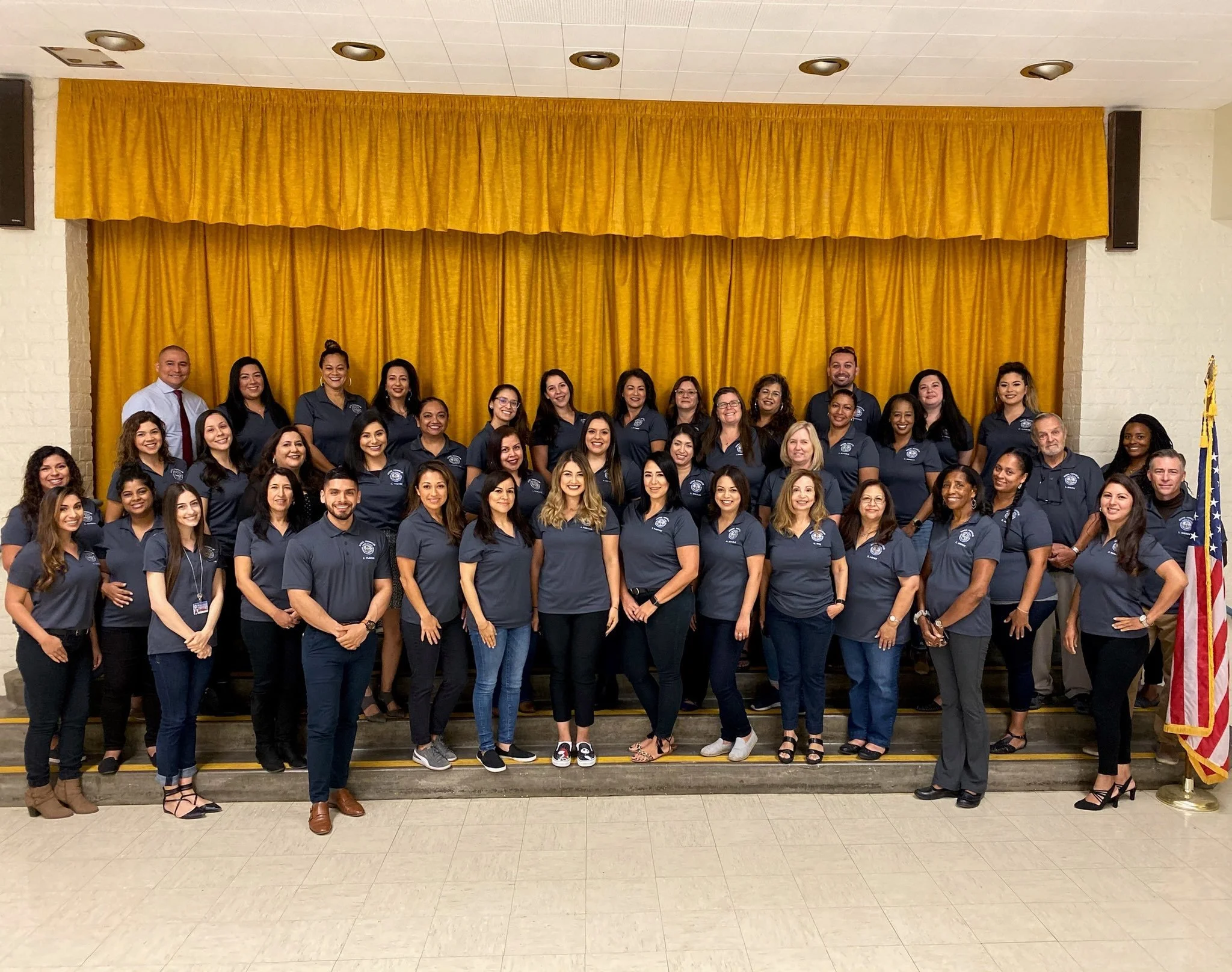
Pomona USD School Counseling Dept, 2019
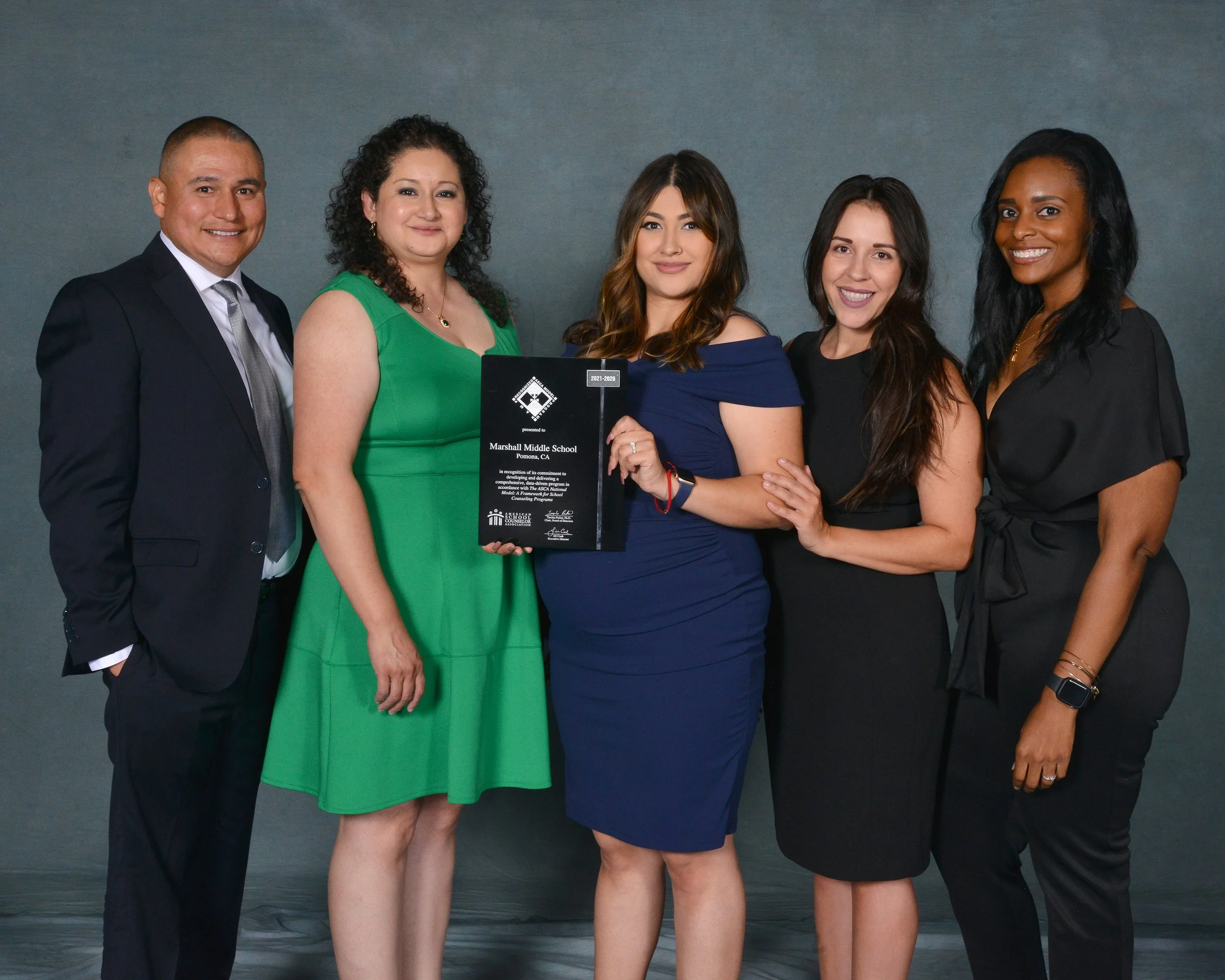
Pomona USD 1st Ramp Award, 2021
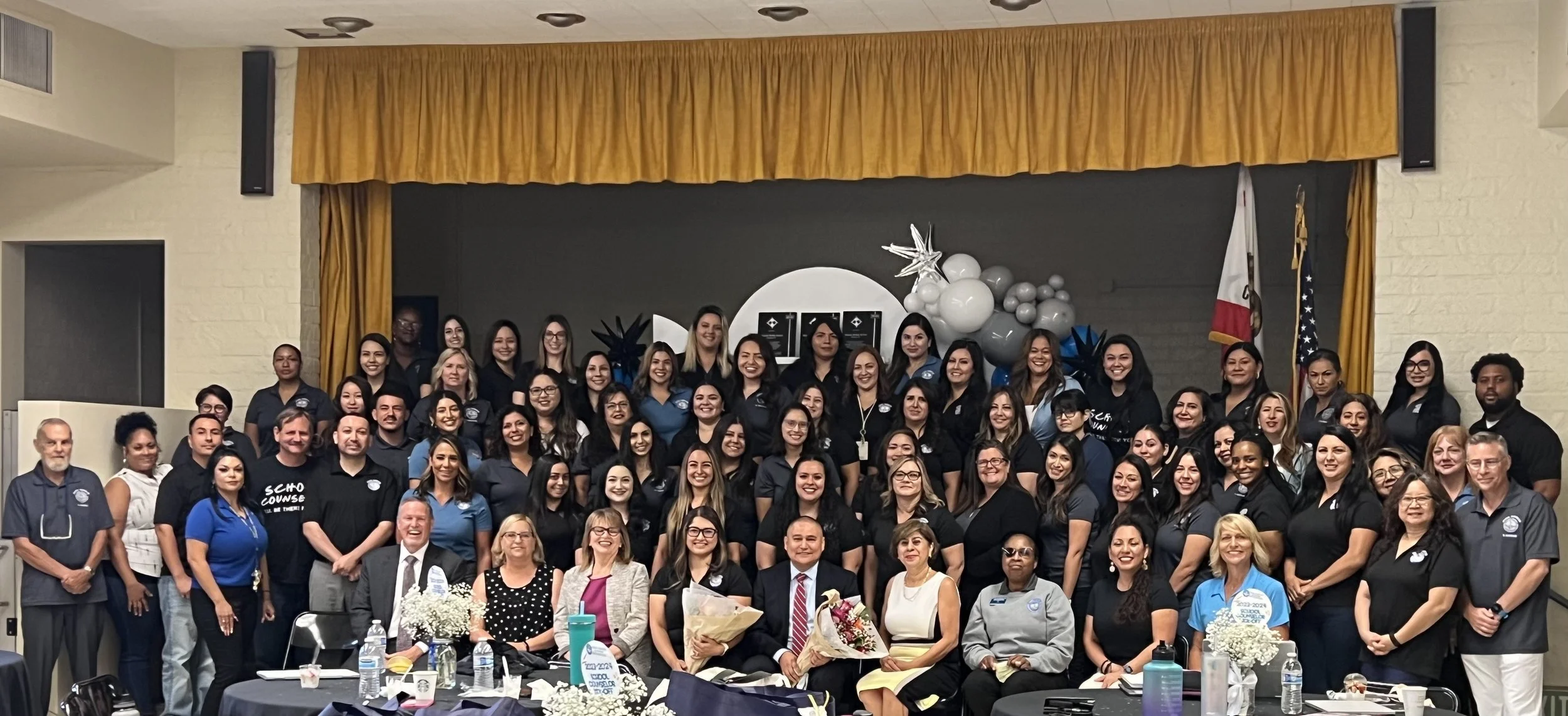
CASC Award, 2024
With Hatching Results as a strategic partner, PUSD transformed school counseling into a sustainable, data-driven lever for systemic change and improved student outcomes. When asked what the team learned or gained from this partnership, Cesar's response was, “A seat at the table. Our school counselors now have the confidence and the evidence to speak with principals as leaders, not just staff members”.
