
The SCOTUS Ruling on Parental Notification of Student Gender Identity
The U.S. Supreme Court, in a 6-3 ruling in Mirabelli v. Bonta on March 2, 2026, temporarily blocked California's AB 1955 policy, which had prohibited schools from informing parents about a student's gender identity change without the student's consent. This decision reinstated a district court injunction, affirming parental constitutional rights to be informed about their child's mental health and educational decisions, including gender transition matters.
Key Implications: School non-disclosure policies are invalidated, affirming parental First and Fourteenth Amendment rights. Staff can no longer conceal or lie to inquiring parents and must inform students about this change in confidentiality.
What the Ruling Does NOT Do: The decision strikes down non-disclosure mandates but does not actively require staff to proactively disclose a student's gender identity.
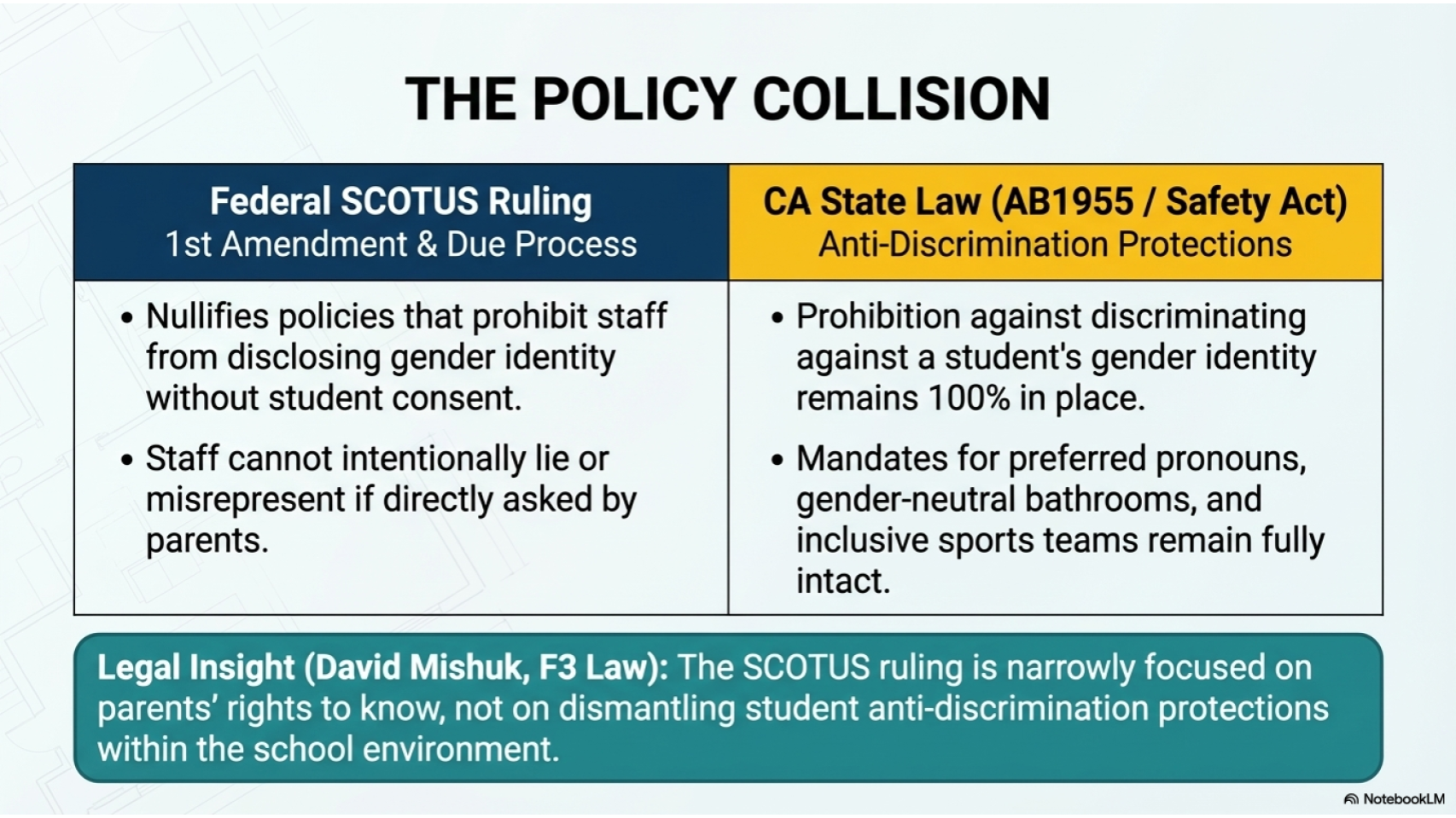
The Conflict: The ruling creates a complex, inconsistent legal landscape by conflicting with the remaining language of California’s SAFETY Act (AB 1955), though its viability is questioned.
Existing Protections: California law still strictly prohibits discrimination based on gender identity. Schools must continue to honor a student's preferred name, pronouns, and provide access to inclusive facilities. School districts must immediately cease enforcing confidentiality rules while maintaining their commitment to transgender youth safety.
In This Article:
Sovereignty and Secrecy: Balancing Parental Rights and Student Privacy
Q & A: Parental Notification and Gender Identity in California Schools
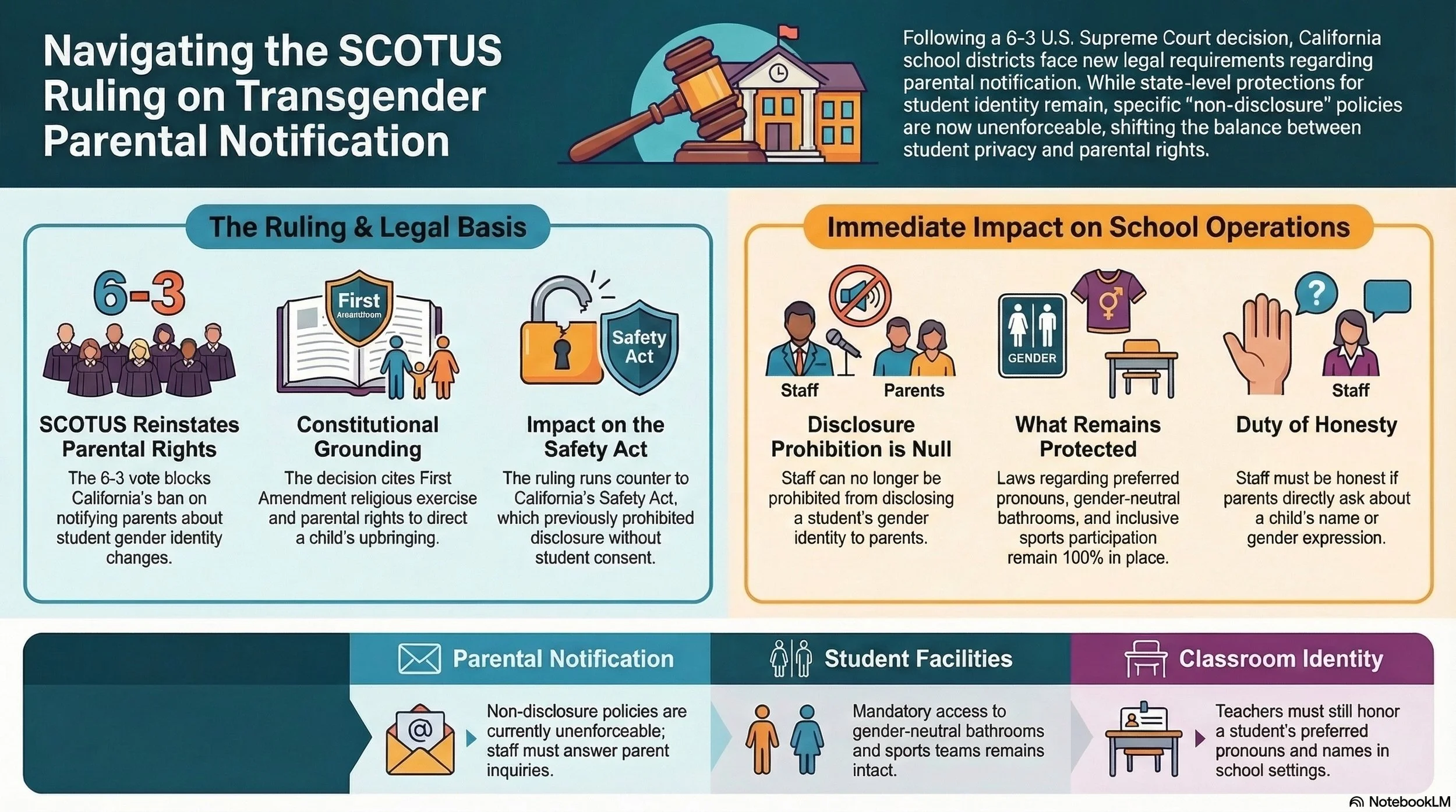
SCOTUS Decision on Transgender Parent Notification (Graphic image)
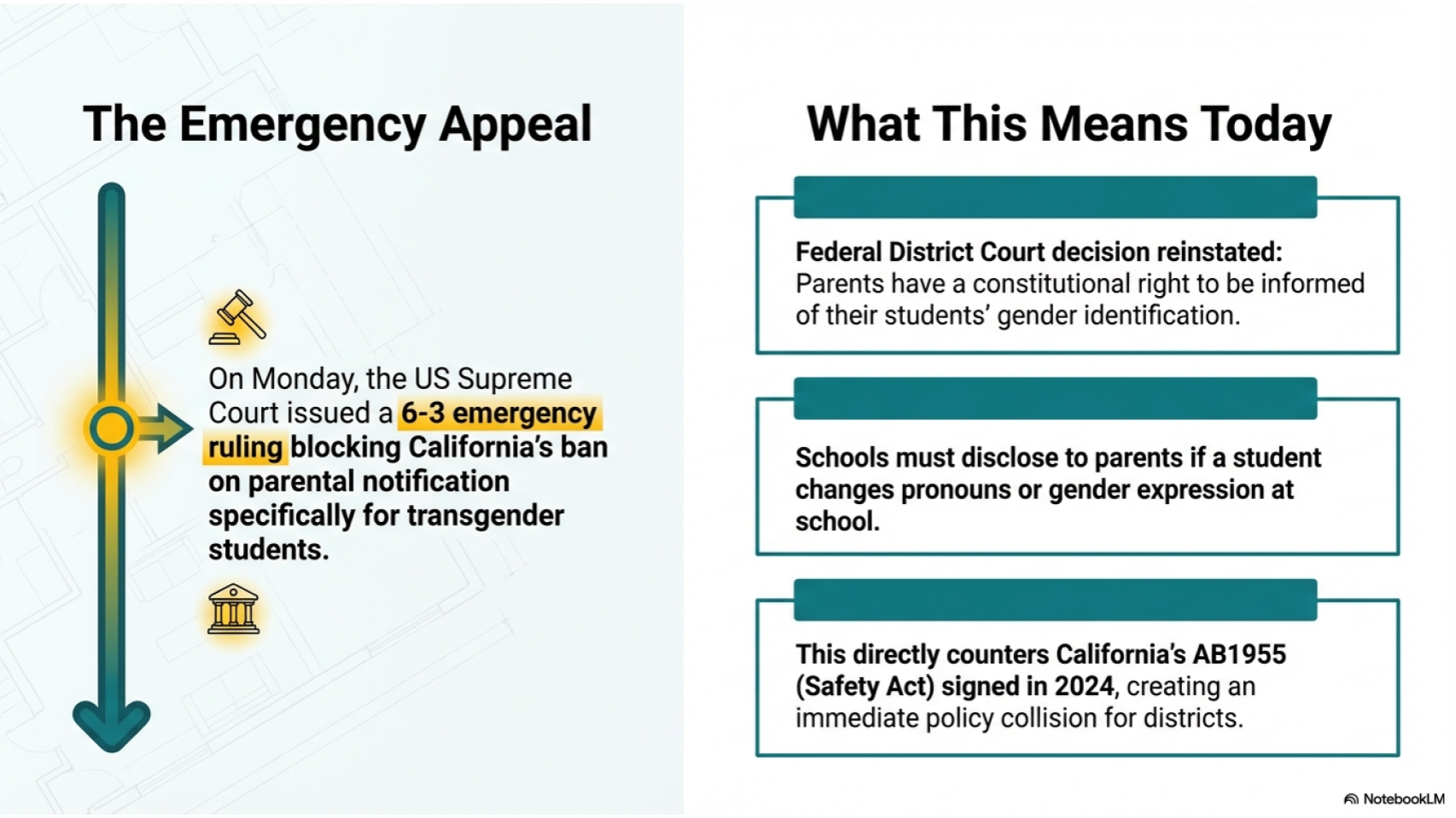
Gender Notification Update(Slide deck based on transcripts from March 4, 2026 ACSA Legislative Lunch Break: Supreme Court on Transgender Parental Notification)
Sovereignty and Secrecy: Balancing Parental Rights and Student Privacy
On March 2, 2026, the legal landscape for California schools shifted following a U.S. Supreme Court decision in Mirabelli v. Bonta. The Court issued a 6-3 ruling that temporarily blocked California's policy (AB 1955), which had prohibited schools from informing parents about a student's gender identity change without the student's consent.
This decision effectively reinstated a district court injunction against the state law. It is seen as a victory for parental rights, affirming their constitutional right to be informed about a child's mental health, upbringing, and educational decisions, including gender transition matters. Consequently, the ruling allows school employees to inform parents if their child expresses gender incongruence at school, reversing policies that previously mandated keeping this information secret from parents.
Key Implications for Schools and Staff:
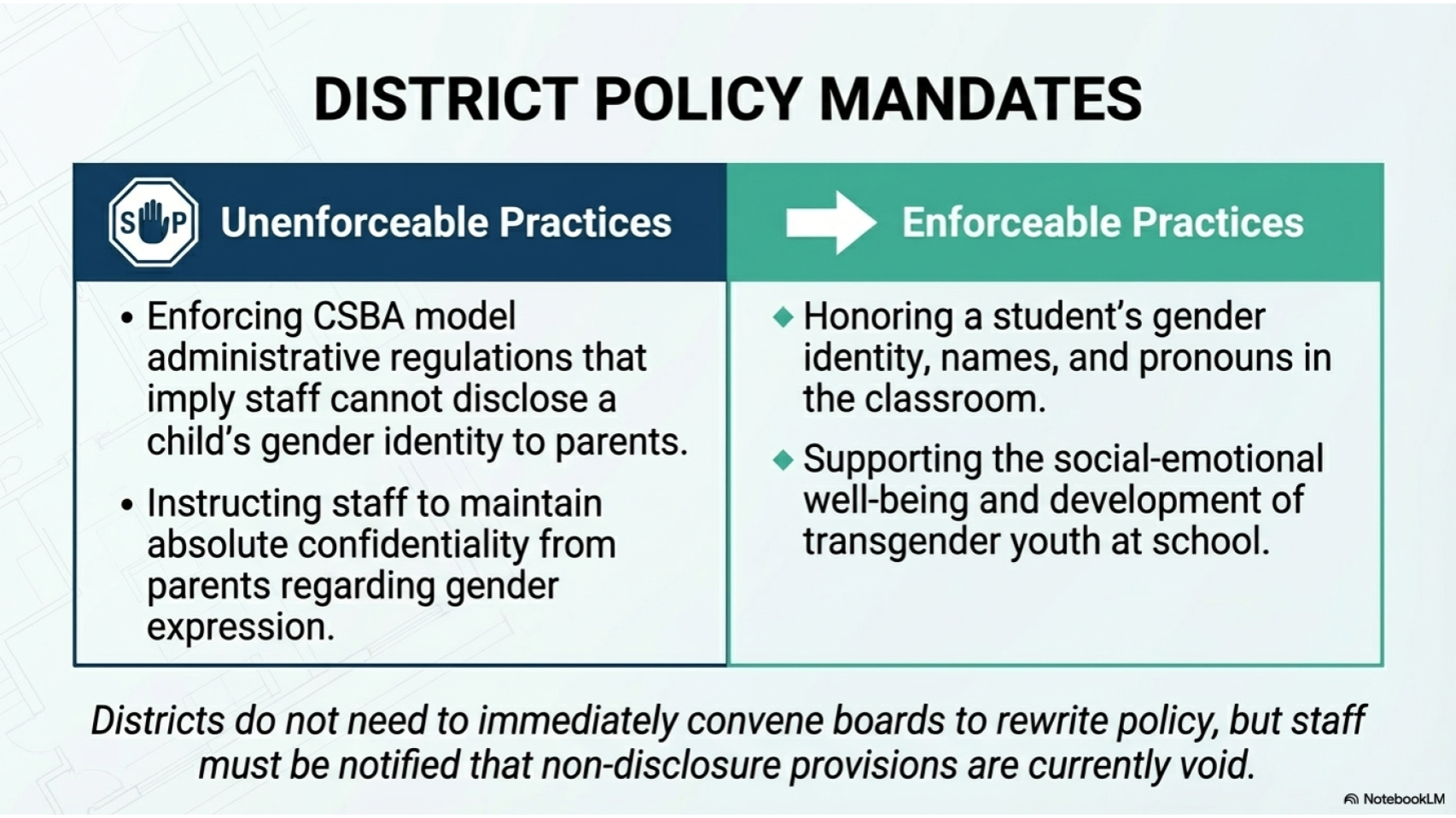
Invalidation of Non-Disclosure Policies: The Supreme Court's action invalidates school policies that strictly forbid staff from disclosing a child's gender identity to their parents without the student's explicit permission.
Affirmation of Parental Rights: The case upholds two primary parental rights: the First Amendment right to direct a child’s religious upbringing and the Fourteenth Amendment's substantive due process right to direct a child’s medical decision-making.
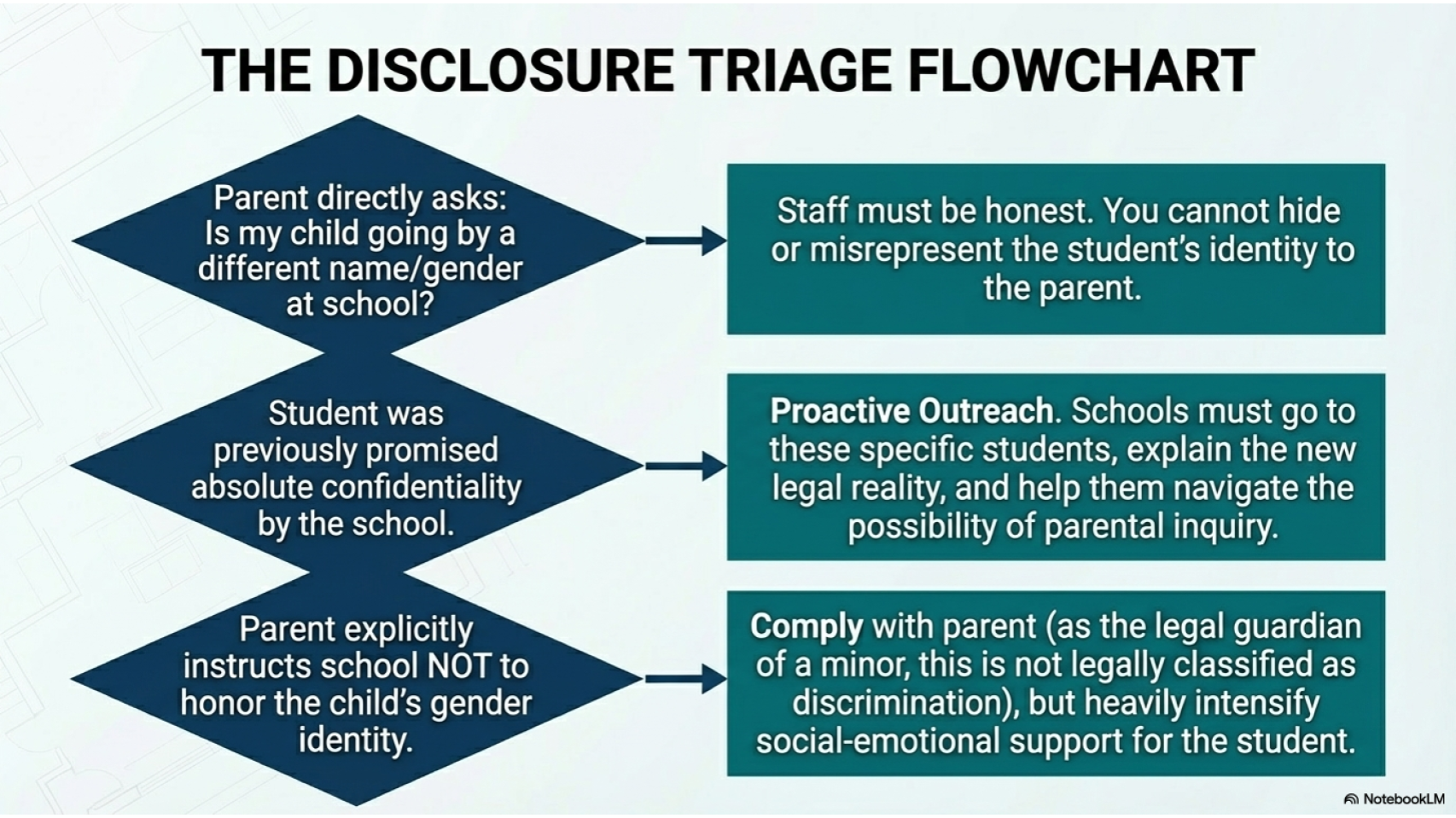
Requirement for Honesty: School staff is now legally required to be honest and can no longer intentionally conceal or lie to parents if directly asked whether a child is using a different name, pronoun, or gender expression at school.
Required Student Notification: Schools that previously promised students confidentiality regarding their gender identity must now inform those students about this change in policy.
What the Ruling Does NOT Do:
While the ruling strikes down prohibitions on disclosure, it is important to note that it does not actively mandate that school staff proactively disclose a student's gender identity to parents. In addition, it does not explicitly repeal or override the specific counselor-student confidentiality protections in California Education Code § 49602.
The Conflicting Legal Landscape:
The Supreme Court ruling runs counter to California’s SAFETY Act (AB 1955), which prohibits school districts from mandating that teachers disclose a student's gender identity against the student's consent. Although the ruling temporarily stops the enforcement of the non-disclosure aspects of AB 1955, the state statute technically remains "on the books."
Legal experts, however, suggest that the court's language makes the SAFETY Act's ongoing viability questionable. This conflict creates a complex and inconsistent legal environment for school leaders, with the specific obligation of staff to proactively inform parents remaining the "next legal frontier."
Existing Protections Remain Intact:
Despite the federal ruling on parental notification, California state law strictly prohibits discrimination based on gender identity. Existing state requirements remain fully intact, meaning school policies must continue to honor a student's preferred name and pronouns, and provide access to inclusive facilities like gender-neutral bathrooms and sports teams.
Ultimately, school districts must immediately cease enforcing confidentiality rules that hide gender identity from inquiring parents while simultaneously navigating their ongoing legal commitment to the safety and well-being of transgender youth.
Q & A: Parental Notification and Gender Identity in California Schools
What was the Supreme Court's ruling regarding transgender students in California?
In a 6-3 decision, the Supreme Court effectively blocked California's policy that strictly prohibited school staff from disclosing a student's gender identity to their parents without the student's consent. This ruling reinstates a federal district court decision affirming a parent's constitutional right to be informed about their child's gender identification at school.
Why are blanket non-disclosure policies considered unconstitutional?
Legal interpretation of the ruling suggests that policies concealing this information violate two constitutional rights: the First Amendment right to direct the religious upbringing of a child ("free exercise") and the substantive due process right to direct a child's medical decision-making. Consequently, school staff are prohibited from intentionally concealing information or misrepresenting a child's gender identity to their parents.
Does this ruling mandate that teachers proactively inform parents if a student changes their pronouns?
No, the decision does not specifically mandate proactive disclosure of a student's gender identity. It strictly strikes down prohibitions on disclosure. However, if a parent directly asks school personnel if their child is using a different name or gender expression at school, staff members must be honest and are no longer permitted to misrepresent the situation.
How does this decision affect California's SAFETY Act (AB 1955)?
The SAFETY Act, which prohibits school districts from forcing staff to disclose a student's gender identity, technically remains law. The lower court's decision noted that it does not directly affect AB 1955. However, legal experts indicate that the court decisions make the ongoing viability of the SAFETY Act highly questionable, creating a complex legal environment for school districts.
What is required of schools that previously promised a student confidentiality?
Schools that previously informed a child or teenager that their gender identity would be kept confidential from their parents must now communicate the change in policy to those students. Schools are expected to help these students navigate the real possibility that their parents may eventually inquire about their gender identity, which the school would then be required to disclose.
Does this ruling impact student-counselor confidentiality?
No. While the ruling significantly shifts the balance toward parental notification, it does not explicitly repeal or override the specific counselor-student confidentiality protections in California Education Code § 49602.
Does this decision permit schools to discriminate against transgender students?
No. California state laws prohibiting discrimination based on gender identity remain fully in effect. Existing requirements for schools to honor a student's preferred name and pronouns, along with providing access to gender-neutral facilities, clubs, and sports teams, are completely intact. The ruling focuses narrowly on parental rights to know, not on allowing schools to discriminate based on a child's gender identity. However, if a parent specifically instructs a school not to honor a minor child's gender identity, following that parental instruction is unlikely to be legally considered discrimination.
ACSA Legislative Lunch Break: Supreme Court on Transgender Parental Notification
Summary: This transcript summary is from an ACSA Legislative Lunch Break: Supreme Court on Transgender Parental Notification broadcast examines a significant Supreme Court ruling regarding the notification of parents about their children's gender identity in schools. Legal experts and educational leaders discuss how this federal decision conflicts with California’s Safety Act, which previously prohibited districts from disclosing such information without a student's permission. The speakers highlight a shift in legal requirements, noting that school staff may no longer be barred from answering parental inquiries honestly. While the court's decision emphasizes parental rights under the First Amendment and due process, the panel notes that other state protections for transgender students remain active. Ultimately, the source reflects the legal uncertainty and the urgent need for updated guidance as California educators navigate these clashing state and federal mandates.
Decision: On March 2, 2026, the U.S. Supreme Court blocked a California policy (AB 1955) that prohibited schools from notifying parents about a student’s gender identity change without consent. The ruling in Mirabelli v. Bonta temporarily allows school employees to inform parents, affirming parental rights to be notified if their child expresses gender incongruence.
Key Details of the SCOTUS Decision:
Action: The Supreme Court overruled an earlier decision by the 9th Circuit Court of Appeals, effectively reinstating a district court injunction against the California law.
Scope: The ruling allows schools to tell parents if their children identify as transgender, reversing policies that forced teachers to keep such information secret.
Legal Basis: The case hinges on parents' rights under the First and Fourteenth Amendments, specifically the right to direct the upbringing and education of their children, including knowledge of their mental health and gender transitions.
Reaction: The decision is a win for parents and teachers who challenged the state's "non-disclosure" policies on religious and constitutional grounds. Critics argue this puts transgender students at risk of abuse at home.
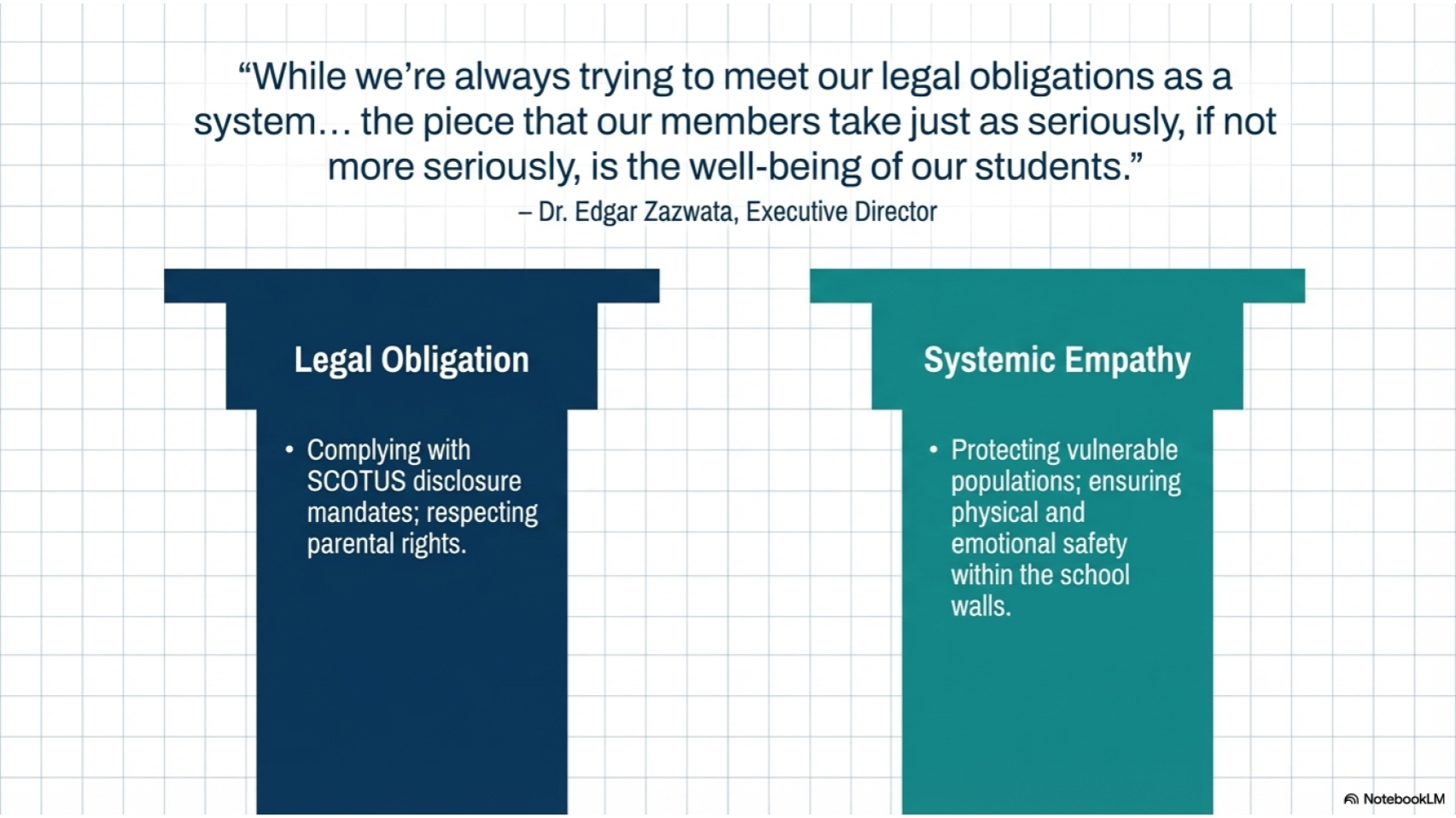
Transcript Summary: This broadcast discusses the recent 6-3 US Supreme Court ruling that blocked California's ban on parental notification for transgender students, essentially reinstating a federal district court decision requiring schools to inform parents if a student changes pronouns or gender expression at school. This decision counters California's 2025 "Safety Act," which prohibits forced disclosure without student consent. The ruling's implications are a major focus, as California has been a leader in transgender rights, making the decision impactful for students despite existing state laws on pronouns, bathrooms, and sports remaining intact. The hosts are joined by an attorney from F3 Law and, briefly, by ACSA Executive Director Dr. Edgar Zazwata, who emphasized the importance of student well-being and the need for immediate guidance from state leaders given the current legal complexity.
The Supreme Court recently ruled on policies that prohibit school staff from disclosing a child's gender identity to their parents without caveats or narrow tailoring. The decision, as interpreted by David Mishik, a partner at Fagen Friedman & Fullfrost, states that such policies violate parents' First Amendment right to direct the religious upbringing of their child and their substantive due process right to direct their child's medical decision-making. Therefore, staff can no longer hide or intentionally lie to parents about a child's gender identity at school.
While this decision strikes down policies that prohibit disclosure without the child's express permission (like some CSBA model policies), it does not mandate that staff must disclose. Existing statutes prohibiting districts from mandating staff disclosure remain on the books, though even that is now questionable.
School districts must immediately address the implications. Provisions, whether express or implied, that bar staff from disclosing a child's gender identity to parents are now unenforceable. Districts must inform staff that they are no longer prohibited from disclosing, and they must be honest if parents directly ask, "Is my child going by a different name or gender at school?" Finally, schools that promised a child confidentiality must now inform the child of this change and help them navigate the possibility of parental inquiry and subsequent disclosure.
The discussion centers on balancing California's Safety Act with the SCOTUS ruling regarding informing parents about a student's transgender status. The lack of clarity on school staff's obligation to inform parents is identified as the next legal issue, with the recent decisions strongly implying a parental right to know.
Regarding discrimination, the legal expert states the Supreme Court is not changing federal discrimination law. State law still prohibits discrimination against a student's gender identity in schools, and policies honoring a student's chosen name and pronouns remain in place. The current case is narrowly about parental rights. Legally, parents are presumed to act in their child's best interest and can make decisions for a minor child, even if they disagree with the child's identity choices, stemming from religious and parental freedom. Therefore, if a parent instructs a school not to honor a child's gender identity, it would likely not be considered discrimination in a strict legal sense since the parent has the right to make choices for the minor. Schools, however, should still support the child's social-emotional well-being.
David's comments highlight the significant lack of clarity regarding the Supreme Court ruling, and how California's Department of Education will respond in the coming weeks. A spokesperson for Rob Bonta, CA Attorney General, stated, "We remain committed to ensuring a safe, welcoming school environment for all students while respecting the crucial role parents play in students lives," mirroring Edgar's wait-and-see approach. The immediate question is what legislation will follow, and if any "middle ground" solutions can circumvent the ruling. It is simply too early to tell.
This audio transcript is from the "ACSA Legislative Lunch Break," which focuses on the Supreme Court's recent decision regarding parental notification of transgender students in schools.
Key Points from the Discussion:
Supreme Court Ruling: The US Supreme Court blocked California's ban on parental notification for transgender students (reinstating a federal district court decision). The 6-3 decision essentially requires schools to disclose to parents if a student changes their pronouns or gender expression at school. This runs counter to California's Safety Act (AB 1955), which prohibits mandatory disclosure without student consent.
Legal Interpretation (David Mishuk, F3 Law): The ruling affirms that policies prohibiting staff from disclosing a child's gender identity to parents violate two parental rights: the First Amendment right to direct a child's religious upbringing and a substantive due process right to direct a child's medical decision-making.
Implications for Districts: Existing school policies that prohibit staff from disclosing a child's gender identity without their express permission are now void and unenforceable. Staff are no longer prohibited from disclosing and must be honest if a parent directly asks about a child's name or gender at school. Schools that promised confidentiality to students must inform those students of the change and help them navigate the possibility of disclosure.
The Safety Act (AB 1955): While the Supreme Court decision strikes down the prohibition on staff disclosure, the law prohibiting school districts from mandating staff disclosure still stands.
Discrimination: State law regarding gender identity discrimination remains in place; schools must still honor a student's chosen name and pronouns. However, the ruling presumes parents act in the child's best interest, and a parent instructing a school not to honor a child's gender identity would likely not be considered discrimination against the minor child in a strict legal sense.
Education Community Reaction (Naj Alakon & Michael Kelly, with Edgar Zazwata): The ruling caused confusion and concern within the education community. While some expected the outcome given the current Supreme Court, it is seen as a devastating blow to transgender students in California. There is a lot of uncertainty about the next steps and a call for clear guidance from state leaders and the Department of Education, particularly on how to balance the ruling with the state's existing laws and commitment to student well-being.
SCOTUS Decision on Transgender Parent Notification
Gender Notification Update
Compiled by Paul Meyers, VP Business, Hatching Results. Contact him at: paul@hatchingresults.com.
