Revolutionizing 504 Coordination: A Collaborative Solution for Student Success
What happens when a longstanding K-12 challenge meets innovative collaboration? In Washington state, a systemic issue that hindered equitable access to comprehensive school counseling programs has sparked the creation of a groundbreaking tool that’s setting new standards nationwide. This is the story of how creative problem-solving and teamwork led to a first-of-its-kind solution–and what it means for students and staff everywhere.
Defining the Systemic Challenge
In 2021, Washington state passed Substitute Senate Bill (SSB) 5030 into law, which clarified the role of the school counselor in alignment with best practice national frameworks, such as the American School Counselor Association (ASCA) National Model (2019) and further required all school districts to develop and implement a comprehensive school counseling program (CSCP) in all schools across the state.
That same year, the Washington Office of Superintendent of Public Instruction (OSPI) partnered with Hatching Results to provide professional learning, consultation, and systems/implementation support to schools and districts across the state so they could experience success with aligning to SSB 5030.
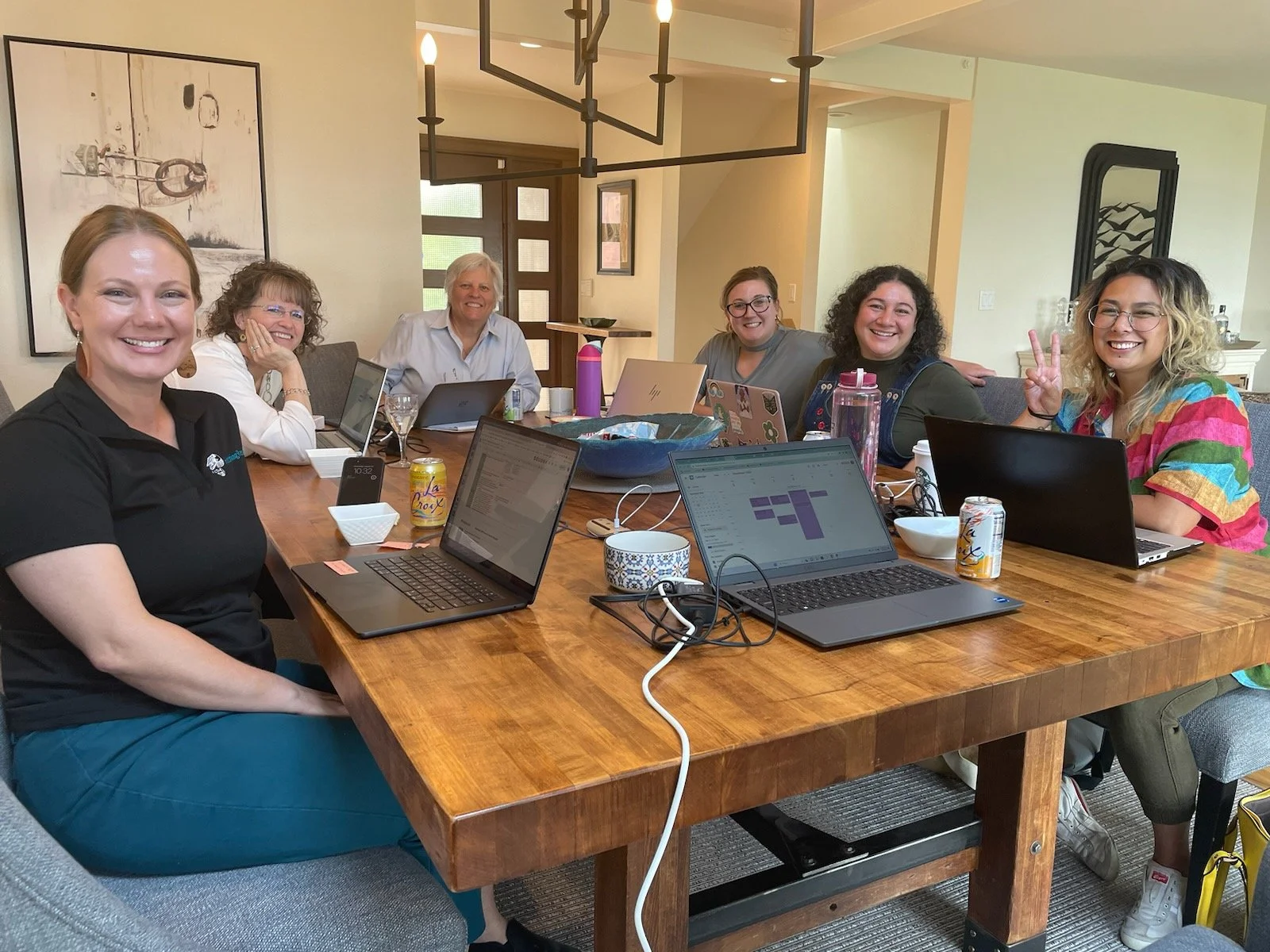
Team Hatching Results and Team OSPI working together.
A significant challenge quickly came into focus: school counselors, administrators, and district leaders across the state were reporting that the current system for site-based 504 coordination was impeding the development and implementation of CSCPs in alignment with SSB 5030. School counselors, often tasked with the overwhelming majority of 504 coordination-related tasks, were spending excessive time on administrative tasks such as scheduling meetings and completing paperwork, reducing their ability to engage in role-appropriate activities, such as:
Facilitating Tier 1 classroom lessons, appraisal, advisement, individual student planning, and other universal supports in the domains of academic, career, and social/emotional development.
Delivering supplemental, data-informed Tier 2 interventions and intentional equity-focused supports to support student success.
Analyzing the results of the CSCP and sharing with the school community how the CSCP is making a difference for students and supporting their success.
Essentially, school counselors were spending so much time scheduling meetings and completing 504 paperwork that they had less time to support students in role-appropriate ways.
“School counselors and other CSCP staff faced a significant challenge: they were legally required to align their comprehensive programs with SSB 5030 but were unable to do so due to the demands of other assigned responsibilities, such as 504 coordination.”
"Although 504 coordination is not a legal responsibility of school counselors, it has become a deeply entrenched norm in K-12 education in Washington, making it difficult to shift. As a result, CSCP staff were caught in a difficult position, feeling the strain of competing priorities while witnessing students missing out on vital support they could otherwise provide if not burdened with 504 tasks. Many principals, school counselors, district leaders, and state leaders expressed a strong desire to address this systemic issue to better support students in alignment with SSB 5030," Triplett added.
It’s important to note that while school counselors play a vital role in supporting students with 504 plans, "initiating, writing, coordinating, and managing the 504 process are actually non-school-counseling tasks and inappropriate duties for a school counselor" (ASCA, 2019). Additionally, “the coordination/case management of Section 504 plans creates multiple role conflicts for school counselors”, including (1) conflict with responsibilities to all students in the school, (2) conflict with the role of student advocate, and (3) conflict with staff and teachers (ASCA, 2024). These tasks create ethical conflicts for school counselors, impede equitable support for all students, and detract from the CSCP’s mission to ensure every student has access to a high-quality, comprehensive school counseling program.
However, there are important roles and responsibilities for school counselors in supporting students with 504s, such as serving as a member of the school’s interdisciplinary 504 team, advocating for students and families, collaborating with school staff, and working toward creating equitable systems and access to the 504 process (read more here: ASCA position statement).
School administrators wanting to support school counselors and work toward equitable solutions also expressed frustration in providing viable solutions because many administrators are not well informed on the various 504 coordination-related tasks (many of which are legally required). Site principals, unsure which staff are the most appropriate to serve in these roles and functions, also needed a tool that could support their decision-making.
Innovative Collaboration and Solution

From left: Association of Washington School Principals (AWSP) Kamrica Ary-Turner with our team’s Whitney Triplett and Paul Meyers at the WASA/AWSP summer conference. (Washington Association of School Administrators)
State leaders in the position to advocate for large-scale systemic change realized that any potential systemic “fix” needed to thoughtfully navigate each of these nuanced considerations. Budget-neutral mandates alone wouldn’t suffice in creating systems change in school counseling, especially in the aftermath of the COVID-19 pandemic, which exacerbated the demand for mental health support, increased the number of students with 504 plans, and highlighted resource limitations. Recognizing the clear opportunity for action, OSPI, the Washington School Counselor Association (WSCA), the Association of Washington School Principals (AWSP), and Hatching Results united in 2022 to tackle the problem creatively and collaboratively.
Together, these partners sought a transformative solution: a tool designed to reimagine 504 coordination through a shared responsibility model, essentially breaking down the large, complex project of “504 coordination” into smaller tasks which can then be thoughtfully assigned to a variety of staff in role appropriate ways. Once drafted, the tool was sent to state associations representing school administrators, school psychologists, school social workers, and school nurses for feedback and improvement.
As Kim Reykdal, Director of Graduation and Pathway Preparation for OSPI and 2016 ASCA National School Counselor of the Year finalist, explains, “Washington's 2021 law to implement the ASCA National Model statewide had many positive ripple effects, including deeper collaboration with state associations and organizations. This inclusive process resulted in a planning template promoting a team-based approach to managing 504 plans and addressing inappropriate responsibilities often assigned to school counselors.”
The resulting "Recommended 504 Team Coordination Planning Template” is the first of its kind, developed through extensive research and collaboration with experts, educators, and advocacy groups. The tool’s objectives include:
Utilizing educators and staff in role-appropriate ways to support 504 systems effectively.
Minimizing administrative 504 tasks assigned to school counselors, allowing them to focus on their trained expertise.
Lauren Mendez, Chief Executive Officer of WSCA (and former school counselor), noted, “The recommended 504 Team Coordination Planning Template provides structure for school and district leadership teams to implement a comprehensive 504 process that utilizes team members, including school counselors, in the most efficient and effective ways. By utilizing this template, districts empower school counselors to serve as student advocates & collaborative team members in the 504 process.”
How It Works

From left: Team OSPI’s Kim Reykdal, Kylie Massey, and Maria Muto attended (and presented at) our National School Counseling Leadership Conference.
The tool provides a structured approach for schools and districts to reallocate 504 tasks. Here’s how educational leaders can implement it:
Assemble a “504 Change Team”: Include staff currently involved in 504 coordination and those who may take on related roles. This team should consist of principals, assistant principals, service providers (e.g., school counselors, nurses, psychologists, mental health staff, behavioral health staff, etc.), and other relevant personnel.
Audit Current Tasks: Brainstorm all tasks associated with 504 coordination, breaking down broad terms like "case management" into specific, “tickable” action items. Be thorough and detailed. Use the template’s included tasks as a starting point, but add additional tasks as needed to the template until all 504 tasks are represented within the tool. The tool is designed to be customizable.
Reallocate Responsibilities: Identify who currently manages each task, assess the expertise required to successfully complete each task, and reassign tasks as appropriate. For example, clerical tasks assigned to school counselors might be reassigned to clerical staff. It is important that leaders with decision-making authority, such as principals, are involved in these discussions so the team can quickly move forward as decisions are made.
Develop an Implementation Plan: Create a realistic timeline for rolling out these changes and designate a point person to monitor progress. Reconvene periodically to evaluate the process and make necessary adjustments (i.e. 2-3 times the first year these changes are implemented and annually thereafter). Ensure there is a clear understanding of how the new systems and processes will be enforced and by whom.
Future Impact and Call to Action
After two years of development and vetting, this groundbreaking resource is now available statewide as an optional but recommended tool for districts and Educational Service Districts (ESDs) throughout the state of Washington. It is also endorsed by OSPI’s Equity and Civil Rights department and used in their 504 Plan trainings as a recommended approach to 504 coordination and is being piloted by schools and districts throughout the state. “The tool essentially creates a viable path forward for administrators, school counselors, and other educational leaders who are seeking to improve student access to comprehensive school counseling programs but so far have gotten stuck in the ‘but what do we do about 504 coordination’ puzzle,” Triplett shared.
“The significance of this 504 Team Coordination Planning Template extends far beyond Washington. It serves as a blueprint for states and districts nationwide, demonstrating how to navigate systemic challenges in fiscally uncertain times through collaboration and creativity. Education associations, both state and national, as well as school districts and state departments, are encouraged to endorse this tool or adapt it to align with their unique contexts.”
Advocacy often requires innovation, and this tool exemplifies how creative solutions can drive systemic change. By reimagining 504 coordination, we can improve access to CSCPs for all students, ensuring equitable support and fostering their success. As Mawi Asgedom once aptly stated, “Sometimes the best way to help students is to help the adults.” This tool empowers educators to organize support structures that better serve students’ needs and potential.
Join the movement! Share this tool widely and collaborate with your teams to implement its principles, adapting the tool to your local needs and requirements. Also, let Hatching Results know how it’s working for you (hello@hatchingresults.com). Together, we can innovate creative solutions to complex educational systems challenges and make a brighter future possible for all K-12 students!
Resources:
Recommended 504 Team Coordination Planning Template: Word | Google Doc | PDF
Want to see how this works in practice? Download our free one-pager for a real example of a team-based 504 planning approach in action!